Today I need to talk about something that really touches my heart. When I'm driving to work between Albæk and Skagen at half past six in the morning, I keep seeing them: motorhomes tucked away on narrow forest paths. Clearly, the tourists spent the night there.
Apart from the fact that wild camping is strictly forbidden here in Denmark, and especially up here in the north, one thing really gives me a sinking feeling: the fire danger. Some of you might smile now: We live here on the Skagen Odde, on a peninsula that lies exactly between two seas, the Skagerrak and Kattegat. "There's plenty of water here!" you might think. But that's a dangerous illusion.
Our fire department (Nordjyllands Beredskab) faces these problems: 1. Sand is poor ground: Our plantations (forests) stand on sand. Heavy fire trucks can barely maneuver on the narrow, soft forest paths or simply get stuck. 2. The logistics of extinguishing: You can't just throw a hose into the North Sea.
Saltwater destroys the fire department's pumps and permanently damages the forest floor. 3. Where does the water come from? In the vast dune plantations, there are hardly any hydrants. Water has to be laboriously transported by tanker truck and that takes time ...
In an area that dries out extremely quickly due to the sandy soil and where strong winds often blow, every minute counts.
Especially up here in the sensitive Skagen Odde, an out-of-control campfire or a hot exhaust on dry ground is a nightmare. That's why the topic of "wild camping" for us isn't a minor offense, but a real threat to our unique landscape.
But how do you do it right? How do you enjoy Danish nature without endangering it? Let's take a closer look ...
- The "Fire Danger Index": In North Jutland, the fire danger index is often particularly high in spring and summer because the sandy soil of the heath and plantation areas doesn't retain moisture. It dries out completely within a few hours after rain.
- Logistics Problem: Danish fire departments in coastal regions regularly warn that setting up a water supply in the dune areas takes up to ten times longer than in populated areas.
- Coastal Heath: The vegetation up here (heather, crowberry, gorse) contains many essential oils and burns like kindling. A single spark is enough, and the wind carries the fire faster than a fire truck can drive.
When people think of outdoor adventures in the north, they often have an image in mind right away: Pitching the tent in the lonely dunes, firing up the grill and enjoying the sunset all to yourself. The famous "freedom to roam" of our Scandinavian neighbors attracts many of you to Scandinavia. But be careful: as soon as you cross the Danish border, the rules change. As a tour guide, I'm often asked: "Can I just stay here?" The answer is a clear: yes and no. We don't have wild camping like Sweden does, but we have something I like to call "luxury wilderness."
In this post, you'll learn everything about the Danish system so your adventure doesn't end with a fine.
1. Denmark vs. Sweden: We're often lumped together with our neighbors, but geographically we're much more densely populated.
- Sweden & Norway: The freedom to roam allows camping almost anywhere.
- Denmark: Wild camping is strictly forbidden. Our nature is precious and needs protection. But we've created an "organized freedom" that's often much cozier!
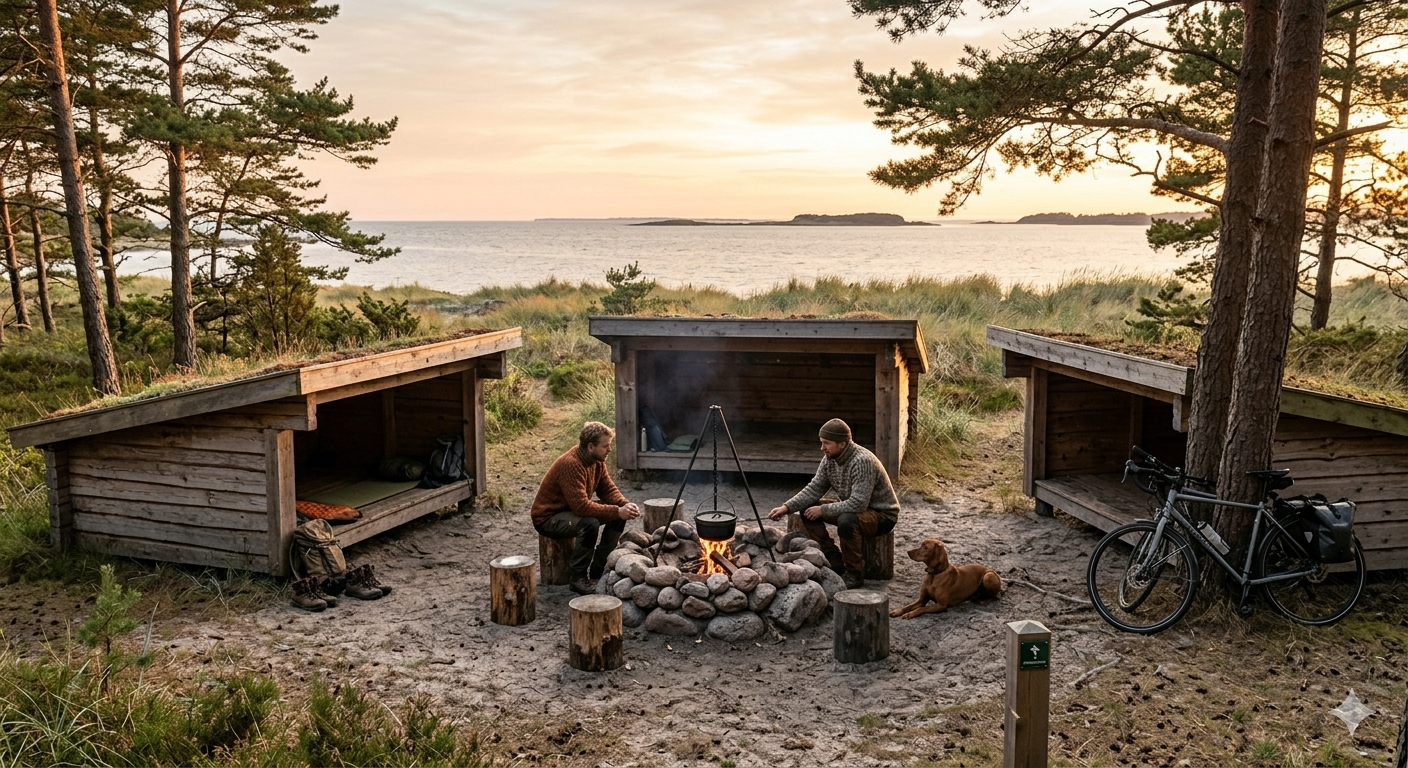
2. The three pillars of Danish "nature freedom" A. The Shelter System: More than just a wooden box A shelter is usually a three-sided enclosed wooden hut. In Denmark, these spots are often little oases of civilization in the middle of nature. What often awaits you there (and what many underestimate):
- Hygge Infrastructure: Many spots offer covered eating and grilling areas, which is worth its weight in gold in Danish weather!
- Sanitary & Waste: There's often a toilet on site, and importantly, waste disposal is often handled by the municipalities. Still keep in mind: what you bring, you take with you if needed.
- Swimming Fun: Many shelters aren't just in the forest. Many are right on the coast. Since our beaches are often rocky, you often find bathing docks there that make it easier for you to get into the cool water.
- The Costs: State sites are usually free. Private/municipal sites cost about 30-60 DKK.
- The 8 PM Rule: Reserved spots are yours until 8 PM. If you're not there by then, your claim expires and the spot becomes available for latecomers.
B. "Fri teltning": Camping in the Forest In around 275 specially marked forests, you can pitch your tent. But be careful, the 1-2-3 rule applies here: 1. 1 night at the same location. 2. Maximum 2 tents side by side. 3. Maximum 3-person tents (no large family palaces).
C. Sleeping on the Beach Can you sleep on the beach? Yes, but only under the open sky! Sleeping bag and mat in the sand are okay. However, as soon as you set up a tent, a tarp, or a beach shelter with a floor, it counts as illegal camping.
3. Vehicle & Arrival: An Important Distinction Often "wild camping" is confused with motorhome camping.
- Motorhomes/Autocampers: Overnight parking in parking lots is forbidden as soon as "camping behavior" (chairs out, awning extended) is visible.
- Parking at the Shelter: Most shelters are designed for hikers and cyclists. However, there are some places where you can park your vehicle directly. But this is the exception! Check this in the app beforehand so you don't have to haul your luggage for kilometers.
4. Your Digital First Aid Kit Without these tools you're lost in the forest:
- www.udinaturen.dk: The official map of the Danish nature administration for all state sites.
- App "Shelter": A must! Shows you nearby spots via GPS, including photos, user reviews and information on water and toilets.
- bookenshelter.dk: Important for reservations, especially on the islands like Ærø, Fyn or Langeland.
5. And a few more important tips
- Four-legged Friends: Dogs are often welcome, but in Danish forests and beaches (except in winter) there's a leash requirement.
- Firewood: Sometimes wood is provided, often you have to collect it yourself (only dead wood!) or bring it. Watch out for the "Brandfare" (Fire Danger) sign when it's dry!
- Equipment: A shelter floor is made of hard wood - bring a thick mat. And don't forget the power bank because there are no outlets in the forest.
- Insects: Pack mosquito repellent and a tick remover. Danish nature is wonderful, but it bites sometimes!
Denmark doesn't offer "boundlessness" like Alaska, but it does offer a warm invitation to slow down the Danish way: safe, clean and truly hygge. Pack your sleeping bag and enjoy the peace... see you out there!