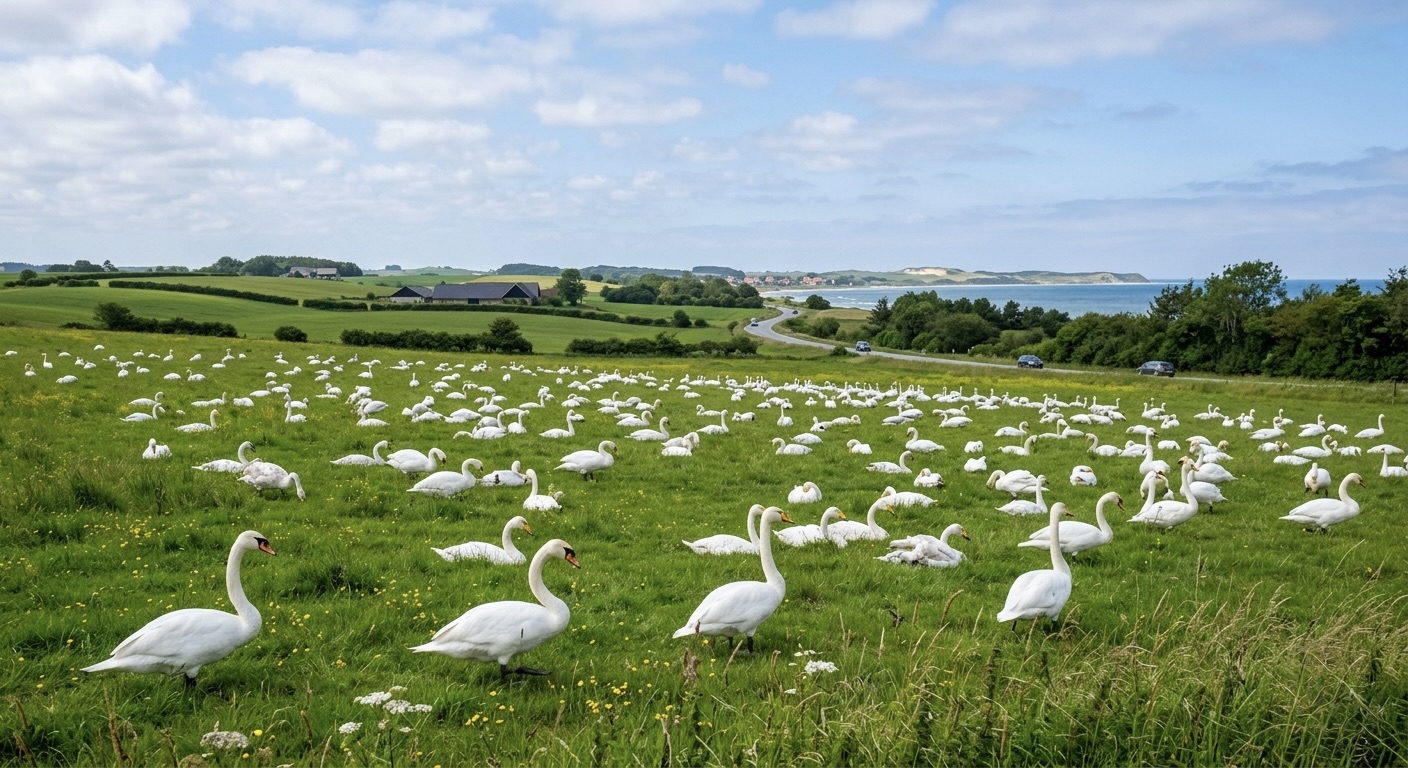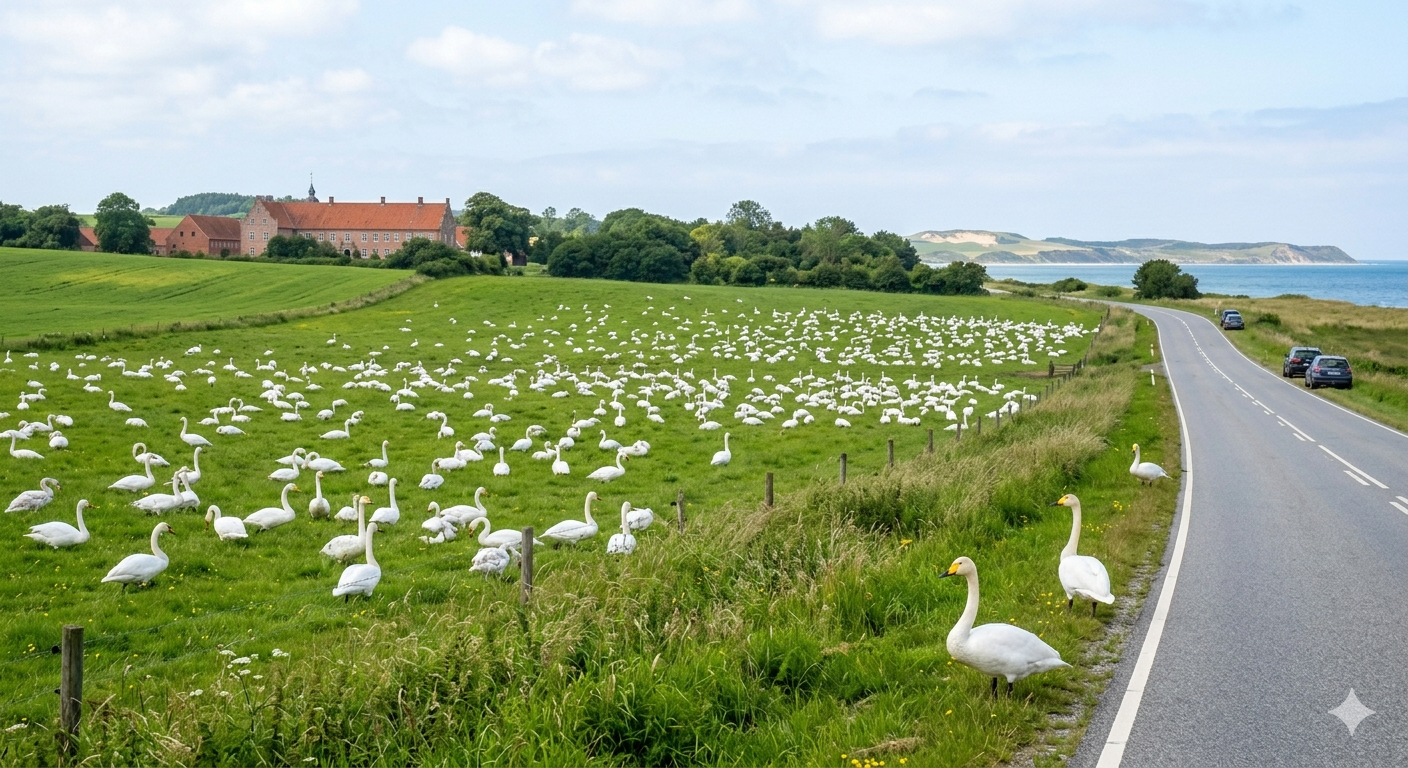
About four weeks ago, I was traveling in northeastern Jutland. My drive took me from Voergaard Slot toward Sæby, along that picturesque road that runs parallel to the Baltic Sea coast. Suddenly, a sight presented itself that almost forced me to pull over to the right: On the vast, green fields, hundreds—yes, what felt like thousands—of white birds were resting. I had never seen so many swans in one place in my entire life.
Like little white clouds that had fallen to earth, they sat there in the first spring light. I asked myself: Where do they come from? Why are they so beloved here? And is a swan really just a swan?
What I saw on those fields was the "traveling party" of whooper swans. While we in Germany often think swans are simply always there, these birds are true world travelers. Denmark is their most important hub in the north. They come from their winter quarters in Central Europe and use the Danish fields as a "refueling station." Here they don't just rest; they feast to build up the energy reserves needed for their monumental flight to Iceland, Scandinavia, or northern Siberia.
Up there, in the lonely Arctic, they'll spend the summer and breed. What's special about them is, as their name suggests, their voice. When they stand in large flocks on the fields, you don't hear aggressive hissing, but a far-reaching, trumpet-like call. It sounds almost melancholic, like a concert from another world.
For many Danes, this song is the surest sign that winter has finally been defeated.
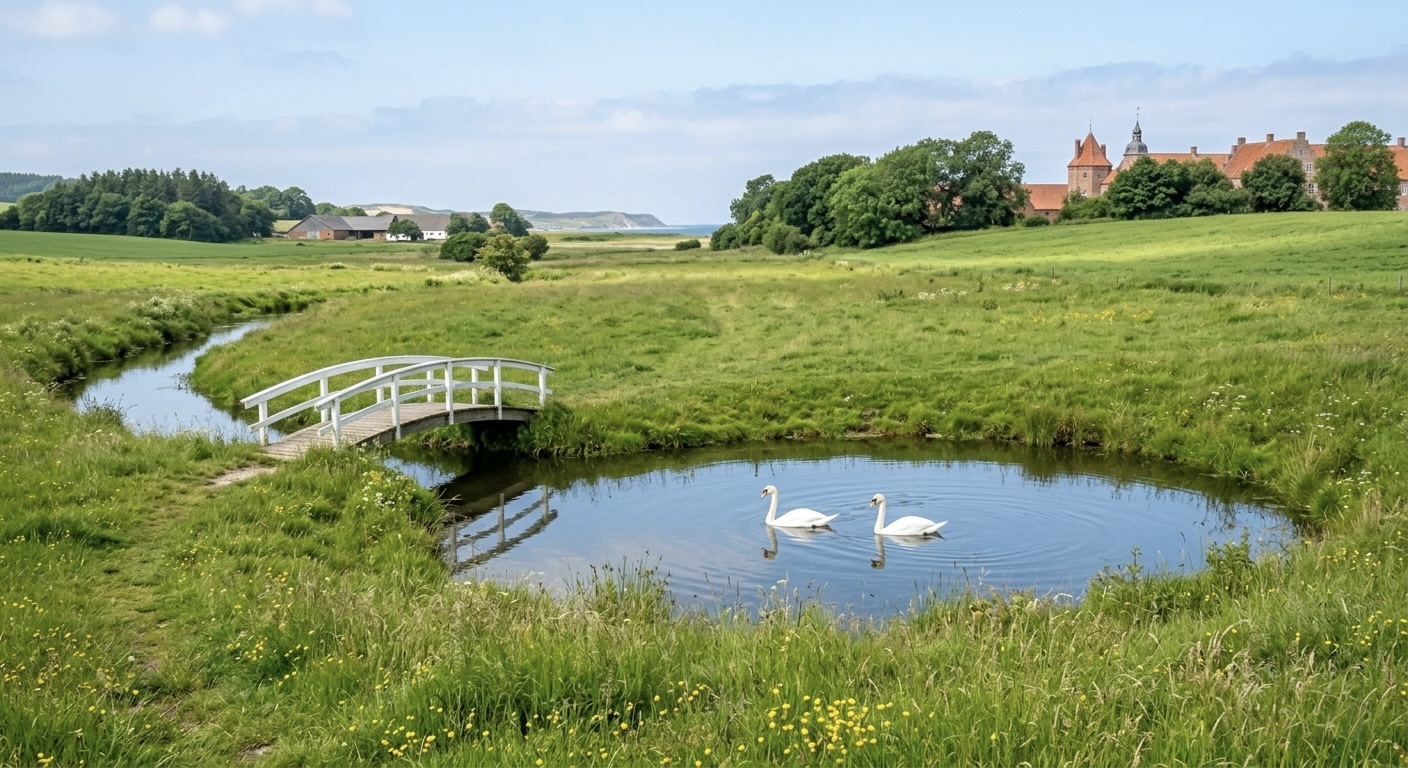
But then there's the other one, which we see all year round in our fjords and lakes: the mute swan. He's the one with the characteristic black knob above the orange bill. Did you know that since 1984 it has been Denmark's official national bird? It won a major national vote against the skylark. And that says a lot about the Danish soul.
While swans are often met with a certain fear in other countries—we tell ourselves gruesome (though anatomically false) stories about broken bones from wing beats—here in Denmark there is deep admiration.
A swan as a houseguest? Yes, please! In conversations with locals, I keep hearing something remarkable: Danes who have small lakes or large water features on their properties earnestly hope that a swan pair will settle there in summer. A nesting swan on your own land is not seen as a danger here, but as nature's compliment. It's a sign of peace and harmony. People are proud of their "royal" housemates.
Just for the sake of classification: In German, the mute swan is often called "Stummschwan." That's a wonderful contrast to the whooper swan. But the Danes prefer to call it Knopsvane, which sounds much more endearing.
And while we've talked about the whooper swans resting, we're still missing the picture in the sky. When the whooper swans take off from the fields near Voergaard, they fly in a perfect V-formation. They do this to save energy. Since they're much heavier than geese, their wing beats are much slower and more powerful; you hear a rhythmic "whoosh-whoosh" that sounds almost like a small helicopter. This sound too is unforgettable.
And one more thing must not go unmentioned: namely that the swans up there at the two seas often make their very last stop before finally making the leap across the Skagerrak to Norway!
But now let's follow in the footsteps of Hans Christian Andersen:
The love for swans doesn't come from nowhere. It's deeply rooted in Danish culture and literature. Our great poet Hans Christian Andersen has created two literary monuments to the swan:
1. The Ugly Duckling: Probably the most famous story about self-discovery and the discovery of one's own beauty. Every Dane grows up with the message: "It doesn't matter to be born in a duck yard, if only you're hatched from a swan's egg."
2. The Wild Swans: In this fairy tale, an evil queen transforms eleven princes into swans. They can only be saved through the selfless love and silence of their sister Elisa.
These stories have led us to see in the swan not just an animal, but a noble, almost human being full of loyalty and dignity.
So the next time you drive through our beautiful Denmark in spring and see the white flocks on the fields, take a moment to pause. They are either the wild whooper swans on their way to the Arctic or our proud national birds, reminding us how magical our nature is.
Here in Denmark, they don't bite—they simply enchant us.
Tip: If you're lucky enough to observe the whooper swans up close, pay attention to their plumage on the head and neck. Many of them wear a beautiful, yellowish-brown shimmer there. These aren't dirt spots! Since they forage for roots and bulbs on the Danish fields, iron oxide from the soil deposits in their feathers.
In sunlight it glows almost like the amber we so often search for on the beaches of Skagen. It's as if they were taking a little piece of Danish gold as a souvenir on their journey to the far north. So when you see them at their last stop in Skagen before they disappear over the sea, you'll know exactly why they sparkle so magnificently!