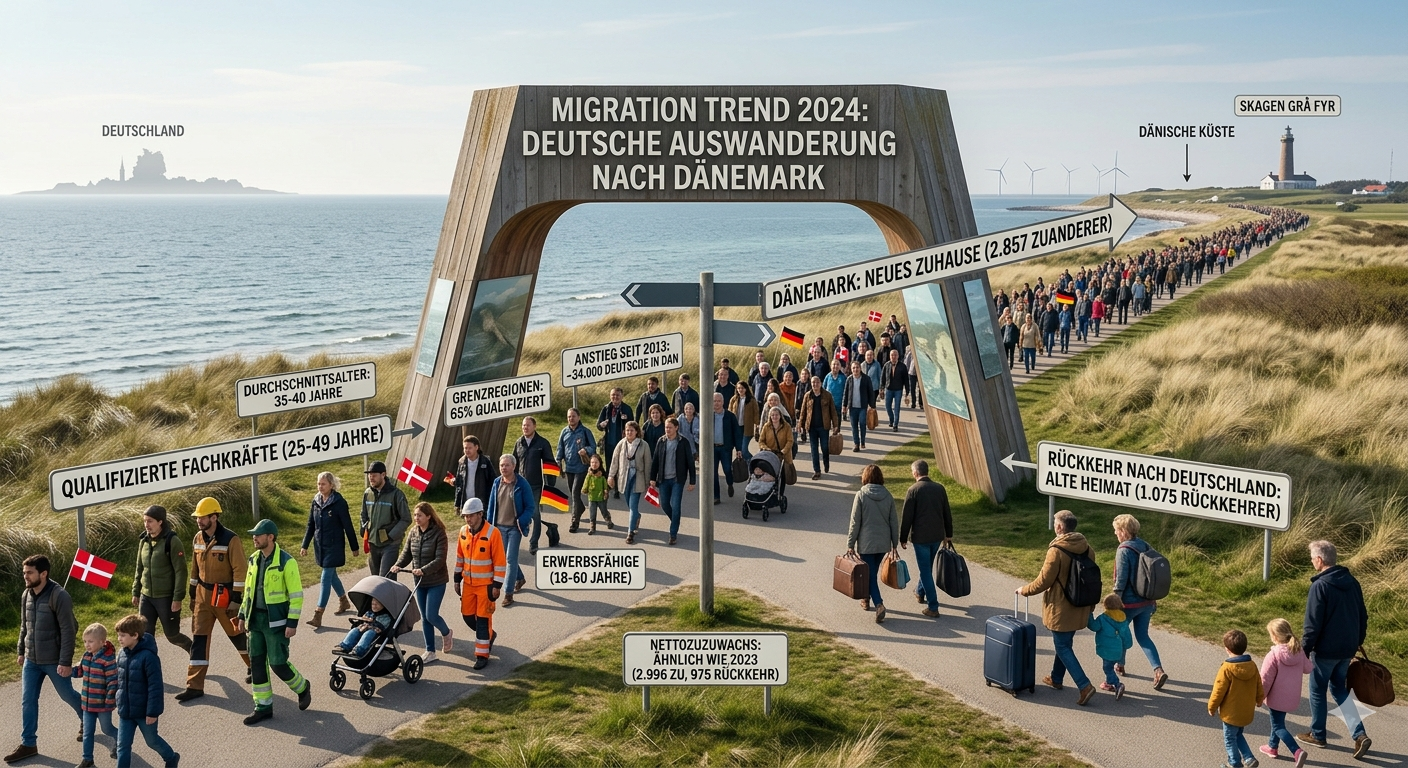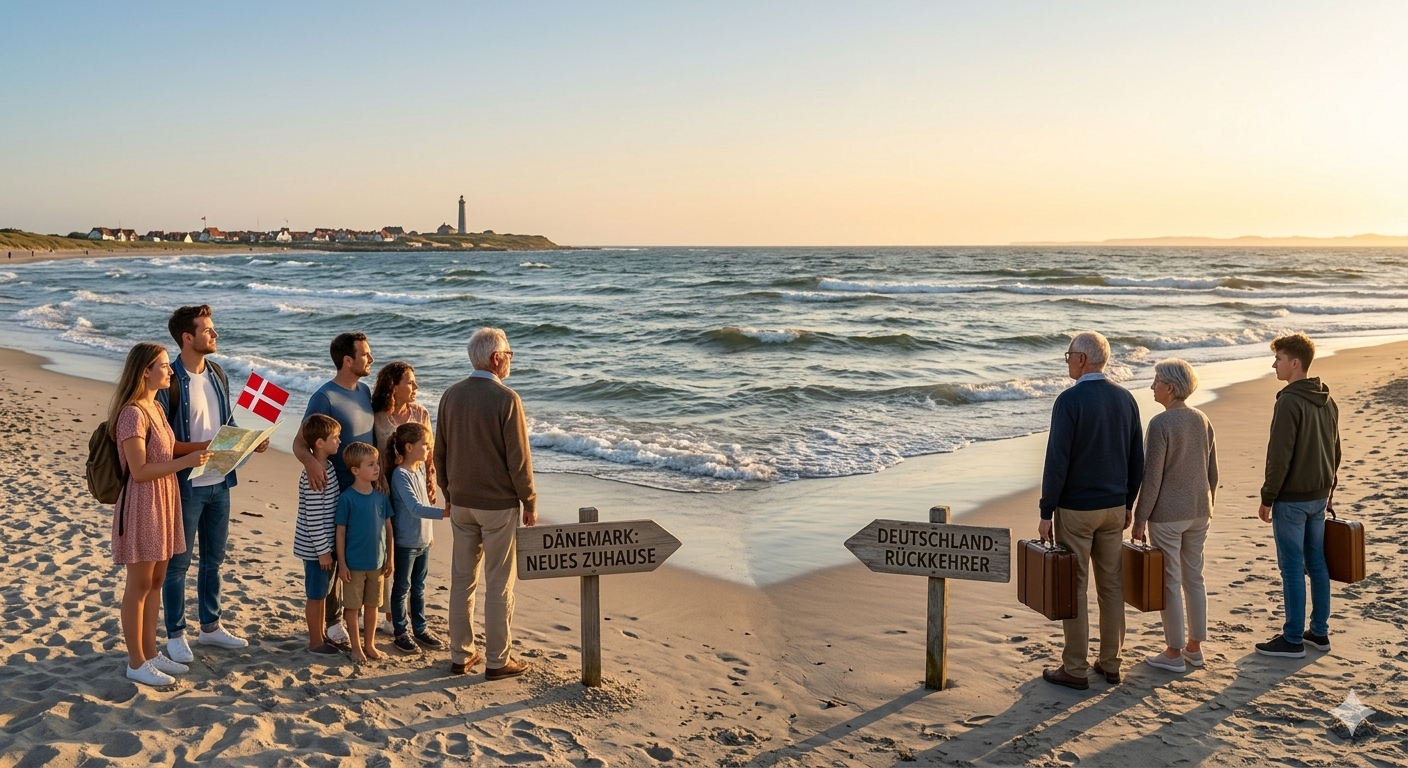
Numbers don't lie, but they often tell only half the story. When we look at the current statistics for 2024, we see a clear trend: Denmark is more attractive to us Germans than ever before. Yet while some find their new home here, one in three packs their bags again after a short time. Why is that? By now I see both sides: the bright eyes of newcomers and the quiet disappearance of those who miscalculated.
Germans and Danes love statistics: 2,857 to 1,075 In 2024, 2,857 Germans took the leap across the border. That's a strong signal and shows that the longing for Danish quality of life, affordable real estate, and a better work-life balance remains unbroken. But, and this "but" is significant: in the same period, 1,075 Germans turned their backs on Denmark and moved back to their old homeland. In plain terms: over a third of emigrants abandon the Denmark adventure again.
Interestingly, it's primarily the 35- to 45-year-olds who make the move. They're families, qualified professionals, and people in the prime of their careers.
- In the border region (like Sønderborg), a proud 65% of German immigrants are highly qualified.
- The goal: a house by the sea, less stress at work, more time for the kids.
- Yet this group is also the one that most often returns. Why? Because reality rarely fits into a 30-second Instagram reel.
Why one in three fails: When the initial euphoria about the "hygge" lifestyle fades, everyday life knocks on the door. Those who return rarely do so because they've stopped loving the beaches. The reasons run deeper: 1. Social isolation: Anyone who thinks they can make it here permanently without the language and genuine engagement in Danish community life (Foreningsliv) discovers after two years that they're still just a "visitor." 2.
Financial miscalculation: Yes, houses are cheaper. But when you have to juggle the "Danish net income" with 25% VAT and without the familiar German safety net, your nest egg melts faster than you can say "Rødgrød med fløde." 3. The employment model: Danish flexibility (Flexicurity) is wonderful as long as you have a job. But when you experience firsthand how quickly a contract can end, and then discover that government support comes with strict conditions, you quickly get homesick for German job security.
Currently, according to statistics, around 34,000 Germans live in Denmark. That's a record high and shows: it can work! Denmark is a wonderful country for anyone willing to embrace a new system instead of just fleeing the old one. The difference between the 2,857 who come and the 1,075 who leave is often preparation. Whoever sees Denmark not just as a backdrop for their dream, but as a country with its own rules, its own culture, and its own history, will be able to put down roots here up north.