We up here in North Jutland still have a bit of a head start.
In mid-September, our days are still a little longer than further south. In the evenings, the light lingers surprisingly late, and sometimes you can almost forget how quickly that will change.
Because the north knows light!
In summer, it sometimes feels as if the day doesn't want to end at all. Late into the evening, this special Nordic light lies across the fields, over the sea, and over our garden. You glance at your watch and wonder that it's already so late.
But the north also knows the opposite ...
Darkness.
And real darkness at that.
It won't be long before daylight becomes noticeably less from week to week. Eventually comes the time when it's already dark in the afternoon around four o'clock. In the mornings, I sit with my coffee, look out the window, and outside it's still night too.
When we moved to Denmark, I thought that would be difficult for me.
These long dark months.
Today I see them differently.
Perhaps also because I've come to understand a word better—one that hardly any other is so closely connected to Denmark:
Hygge.
And no: hygge doesn't mean candlelight.
If you search for "hygge" outside of Denmark, you might sometimes think the Danes once decided to light as many candles as possible, drape a wool blanket over their legs, hold a mug of cocoa in both hands, and turn it into a national philosophy.
Candles.
Pillows.
Wool blankets.
Fireplaces.
Wool socks.
A nice cup of tea.
All very lovely.
And all of that can be hyggelig.
But it's not hygge.
A candle creates no more hygge than a beautifully set table automatically creates a beautiful evening.
The interesting part begins beyond all that.
So what does hygge actually mean?
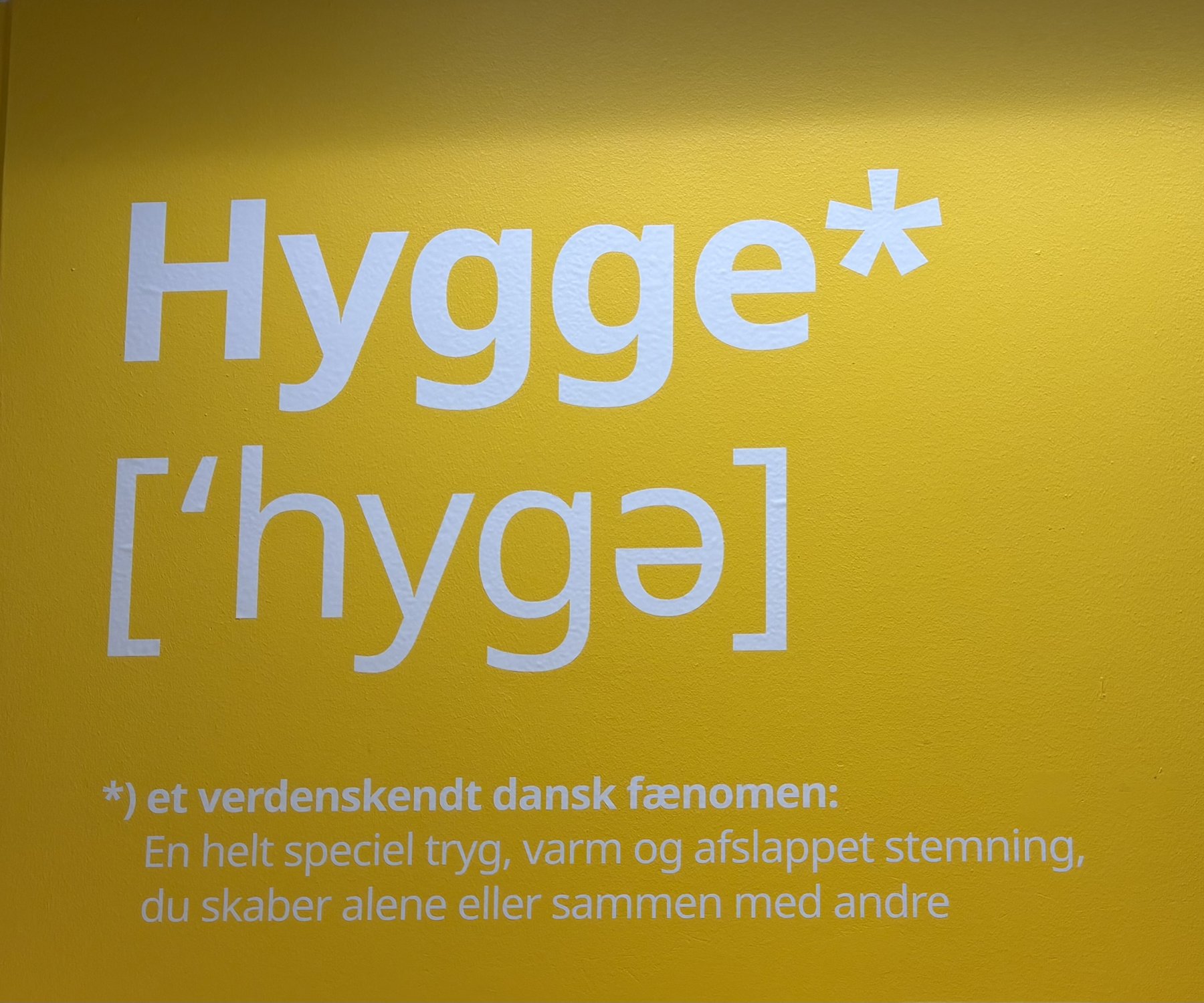
The Danish dictionary describes "at hygge" roughly as experiencing or creating a pleasant, safe, and relaxed atmosphere.
And that comes much closer to the truth.
Because hygge doesn't primarily describe an object.
It describes an atmosphere between people.
You can eat together and have hygge.
You can sit on a park bench.
You can grill with friends on the beach in summer.
You can drink coffee together in the morning.
You can stand in the kitchen in the afternoon and talk.
You can spend an evening where nobody does anything special, and afterward say:
"Det var hyggeligt."
It was hyggelig.
And everyone knows what's meant.
Not: The decoration was beautiful.
But:
It was good to be there together.
Hygge is a small protected space.
The longer we live in Denmark, the more I have the feeling that something very Danish lies precisely in this.
In a truly hyggelig situation, nobody has to prove anything.
For a moment, you can take off your armor.
It doesn't matter much what someone's profession is, how successful they are, what they own, or how important they might feel outside this moment.
You sit together at a table.
Or on the beach.
Or somewhere with a cup of coffee.
And for this time, that's completely enough.
Nobody has to win.
Nobody has to impress.
Nobody has to be better than anyone else.
Perhaps that's one reason why hygge is so hard to translate.
The German word "Gemütlichkeit" captures part of it; but only part.
Because a room can be cozy.
An armchair can be cozy.
A fireplace can radiate coziness.
Hygge goes beyond that.
It has to do with the way people are with each other.
Hygge also means: We create it together.
Hygge is rarely a solo endeavor.
Of course, I can make myself comfortable alone. I can read a book, listen to music, drink coffee, and enjoy a peaceful afternoon.
But hygge becomes especially clear in community.
And there's something about it that's hard to put into rules.
Everyone contributes a little.
Nobody constantly pushes themselves into the center. Nobody turns a relaxed evening into a competition. Nobody has to show that their life is bigger, better, or more exciting.
You share.
Not just the food or the coffee.
You share the moment.
And perhaps that's exactly the decisive difference:
With hygge, it's not about being entertained.
It's about creating a good time together.
For a moment, nothing has to happen.
Perhaps that's even the most unusual part of hygge for us today.
We're used to constantly doing something.
Accomplishing something.
Improving something.
Planning something.
Achieving something.
Even our free time sometimes becomes a project.
Quickly drive over there. Look at this. Experience that. Take a photo. Post something. Check off the next item.
Hygge offers a surprisingly simple idea against all this:
Right now, nothing needs to happen.
This moment doesn't need a result.
A coffee doesn't have to lead anywhere.
A conversation doesn't have to solve a problem.
An evening doesn't have to be spectacular.
It's simply allowed to be good to sit there.
Perhaps that's why hygge is also a form of presence.
Not in the esoteric sense.
But quite practically:
We are here now. And that's enough.
And what does that have to do with Denmark?
Of course, people everywhere in the world can sit comfortably together.
Hygge isn't a magical ability you receive at the Danish border.
And yet the concept seems to fit particularly well into the culture here.
Denmark is strongly shaped by an idea of equality. Large status differences are often less emphasized in daily interaction. Added to this is comparatively high social trust.
Both create something important for hygge:
Safety.
Because you can relax especially well where you don't constantly have to think about how you come across.
Where you don't have to be on guard.
Where you don't have to prove that you belong.
You could almost describe hygge as a small social contract:
For this time, we make life a little softer.
We meet as equals.
We care for each other.
And we leave everyday life outside a bit sharper than it needs to be in here.
And then the candles return after all.
And that's exactly where the famous candles suddenly find their proper place.
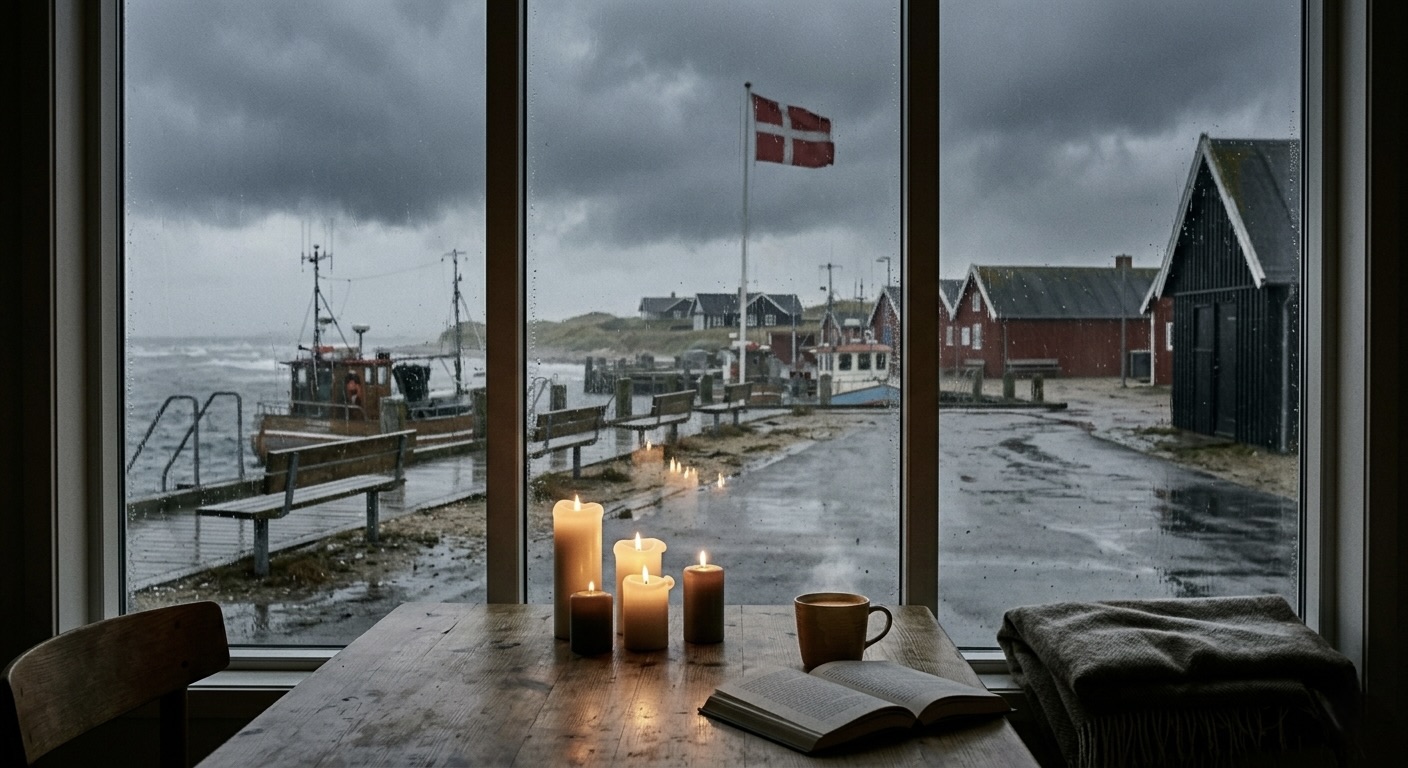
When it gets dark outside at four o'clock and the wind howls around the house, we're happy to light candles too.
Not because hygge is impossible without candles.
But because light does something to a space.
A small, warm light can say:
It's pleasant here.
We're staying for a bit.
We don't need to go anywhere right now.
But the candle is just the backdrop.
Hygge doesn't sit on the table.
It sits between the people sitting around it.
And perhaps that's exactly why you can eventually even learn to love the Danish winter a little.
Outside, it's dark.
Inside, there's maybe a cup of coffee.
Maybe a candle is burning, maybe it's not.
And maybe you simply sit together and talk about completely trivial things.
Nobody has to go anywhere.
Nobody has to perform.
Nobody has to be anyone else.
And eventually, someone says:
"Hvor er det hyggeligt."
How hyggelig it is here.
And suddenly you understand that this little Danish word is so much bigger than candles, wool blankets, and fireplaces.
Hygge is not decoration.
Hygge is the shared permission that for one moment, it's simply allowed to be good, just as it is.