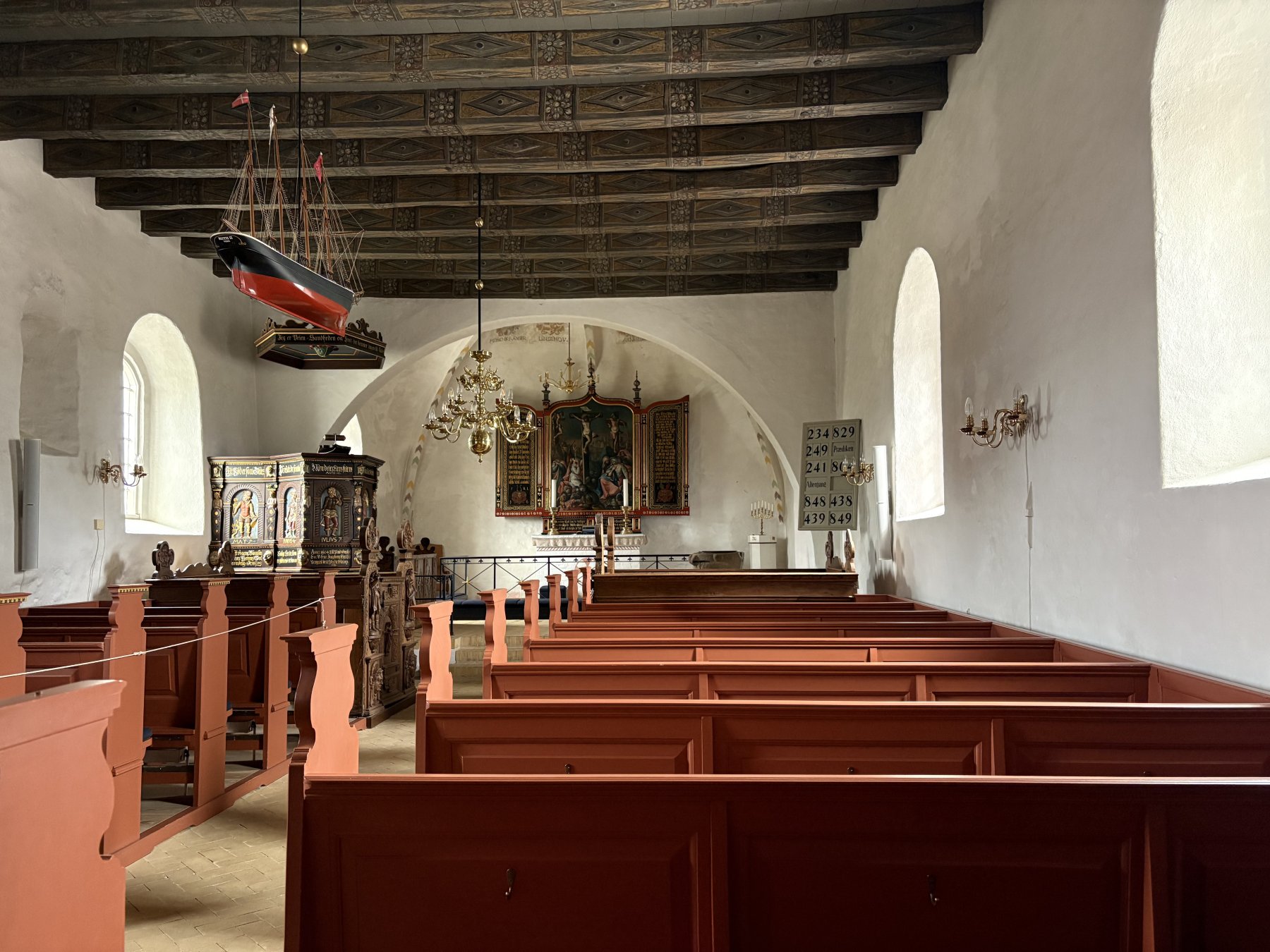
When you drive through the gentle landscape of Vendsyssel, you come across a place that reflects the power and wealth of Danish nobility like few others: the Voer Church.
Located in the shadow of the famous Voergaard Castle, this church is far more than just a village parish church.
It is a magnificent monument, a family mausoleum, and a treasure trove of rare Renaissance art.
Built on a foundation of granite and history...
The story of Voer Church begins, like so many Danish village churches, in the High Middle Ages. The core of the building is Romanesque, constructed from massive granite ashlars. But anyone entering the bright interior today does not gaze upon simple Romanesque architecture, but rather the splendor of Late Gothic and, above all, the Renaissance.
At a time when the nearby Voergaard Castle flourished under the legendary (and often feared) Ingeborg Skeel, the church too was redesigned to suit the tastes of its noble inhabitants.
The highlights of the interior:
1. The Pulpit: A Calendar in Wood (1604)
One of the most unusual pieces is undoubtedly the pulpit. While most pulpits of this era depict biblical scenes or evangelists, Voer offers something almost unique: the representation of the months.
- In the skillfully carved panels, you see reliefs depicting agricultural labor throughout the year.
- Particularly striking are the panels for "Avgvstvs" (August) and "September." They show farmers at harvest, a rare example of secular, peasant motifs in such a grand church.
2. The Altarpiece (1621)
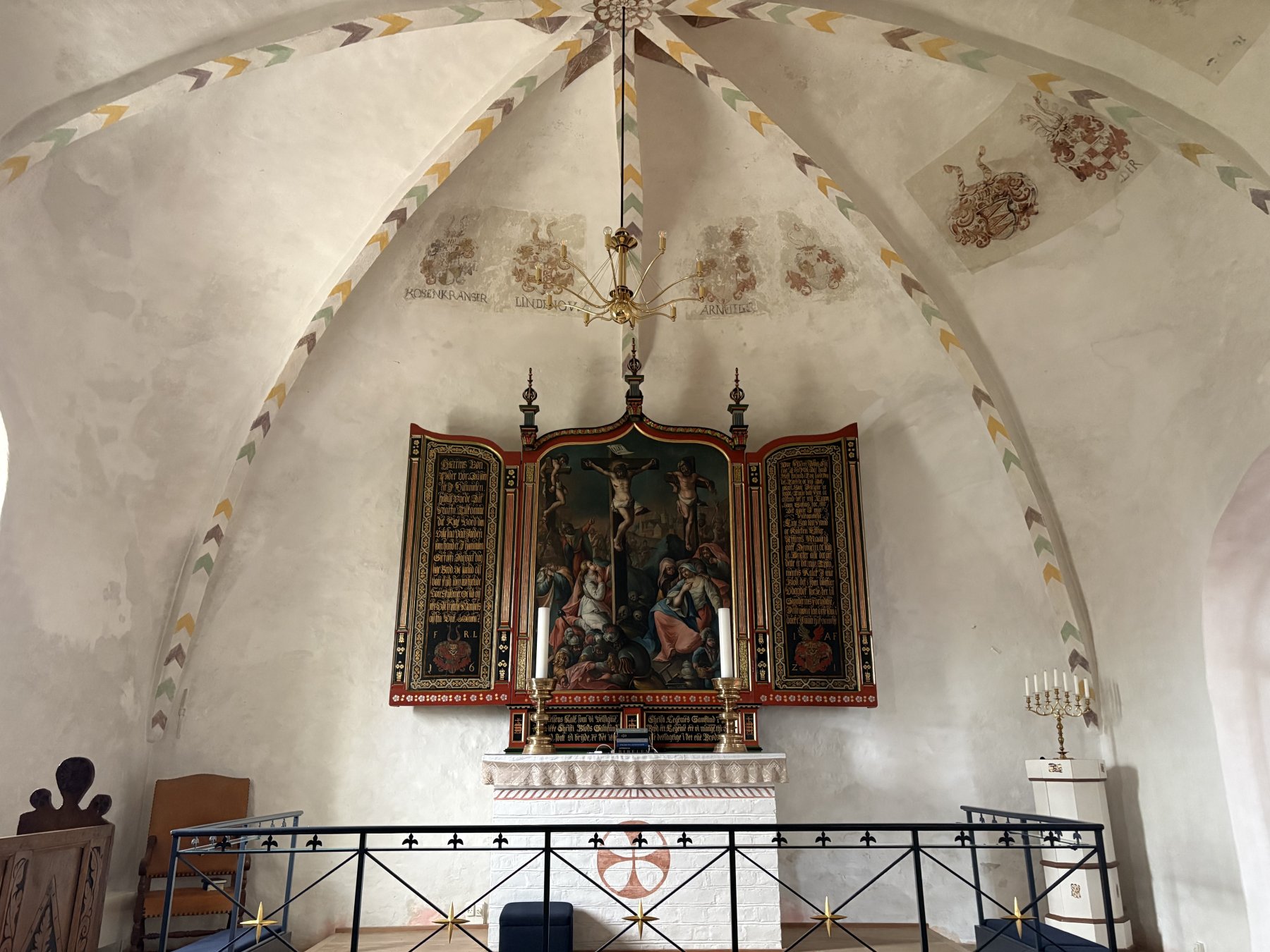
The altar is a classic example of Nordic Renaissance style. At its center stands an impressive painting of the Crucifixion of Christ. But the eye quickly wanders to the side wings and the superstructure: here shine the coats of arms of the Skeel, Banner, Rosenkrantz, and Lindenov families.
It is a visual genealogy of power, making it clear to church visitors who held authority here.
3. The Monument of Eternity: The Epitaphs
No visit to Voer is complete without pausing before the impressive Skeel-Banner epitaph in the choir.
- It shows Ingeborg Skeel and her husband Otte Banner kneeling before the crucifix.
- The monument is crafted from the finest sandstone and so detailed that you can almost hear the fabric of their garments rustle. It was likely commissioned from one of the leading workshops in Antwerp—a sign of the founder's immense wealth.
4. Karen Krabbe's Stone: "New" After 400 Years
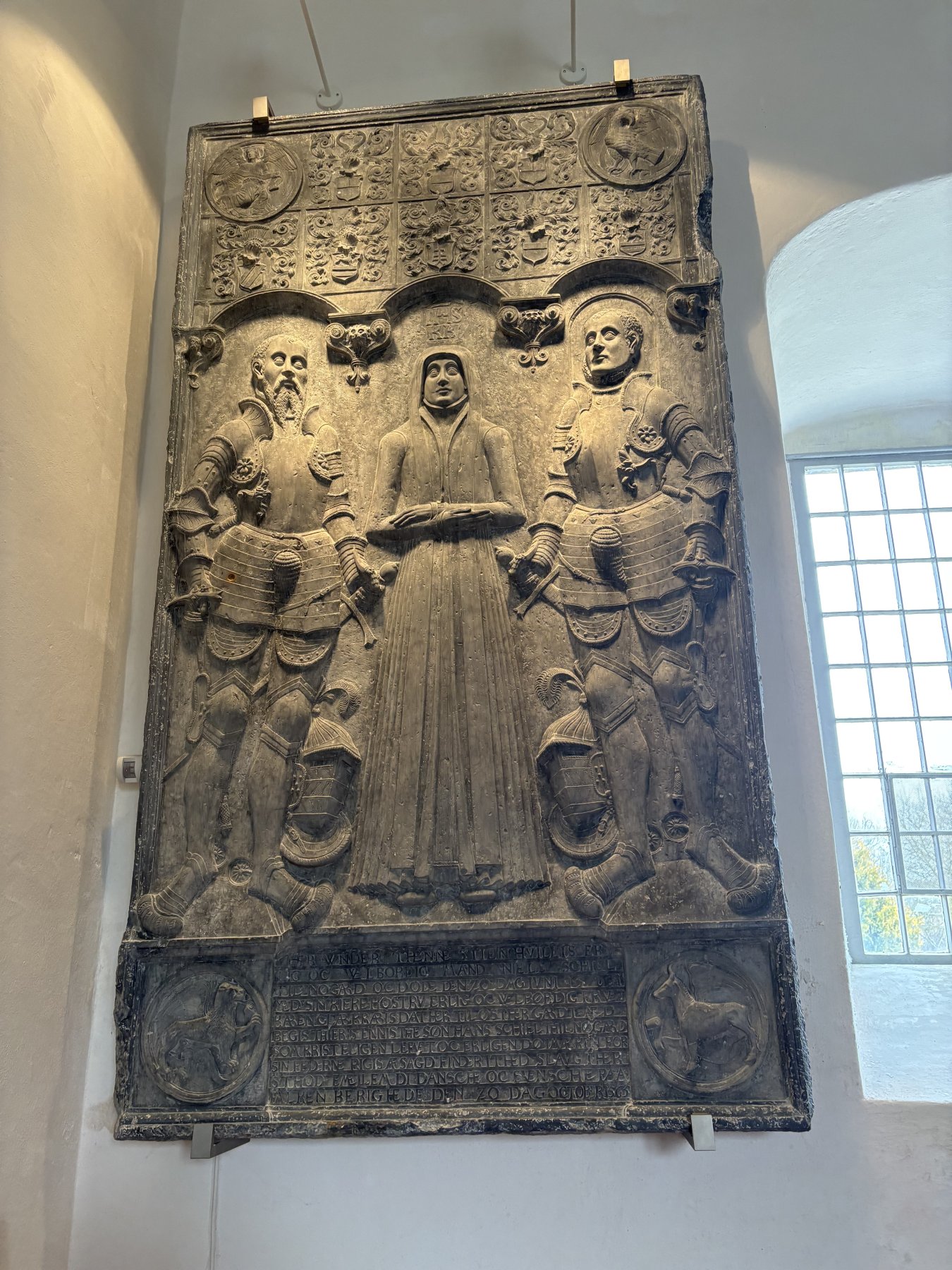
A true curiosity is the gravestone of Karen Krabbe (Ingeborg Skeel's mother). While most gravestones of this period were set into the church floor and worn smooth by the footsteps of the faithful over centuries, this stone had a different fate. In 1586, her daughter Ingeborg hung it as a memorial on the wall. Because it was never walked upon, the reliefs and inscriptions today remain as sharp and flawless as if they had been carved just yesterday.
Maritime Tradition: The Votive Ship
As befits a church near the coast, a magnificent votive ship hangs in the nave. It bears the name "Dannebrog" and recalls the deep connection of the people of Vendsyssel to the sea. It symbolizes God's protection for the sailors and the community, which often lived from fishing.
On the north wall there is also a large-scale painting of the "Miraculous Draught of Fishes." It fits perfectly into the maritime atmosphere and creates a colorful focal point in the otherwise whitewashed nave.
The Bell of Voer
In a niche of the church you can see today the old church bell. It was recast in the year 1800 by Niels Skeel (a later owner of Voergaard). For over 190 years it called the congregation to worship until it was retired in 1991 and replaced by a new bell in the tower. Today it stands as a tangible piece of history right before visitors.
Why It's Worth a Visit
The Voer Church is not a museum, but a living place that breathes the history of Denmark. Between the magnificent noble coats of arms and the simple depictions of farmers on the pulpit, you find here the entire social hierarchy of the 17th century in one place.
A tip for visitors: By all means combine your visit to the church with a walk to Voergaard Castle. Only in the interplay of these two places do you truly understand the full dimension of the history that Ingeborg Skeel shaped here.