Last night we attended a wonderful choir concert in the church in Frederikshavn.
On the way out, a friendly gentleman in Swedish traditional dress slipped me a small piece of paper with a phone number on it. He spoke Swedish to me, smiled kindly, and I was honestly a bit bewildered at first. But then I had to laugh, because I suddenly understood what it was all about.
Actually, this little encounter pretty much sums up the entire evening. It wasn't just a concert. It was an evening full of warmth, community, music, and Scandinavian heartfelt hospitality.
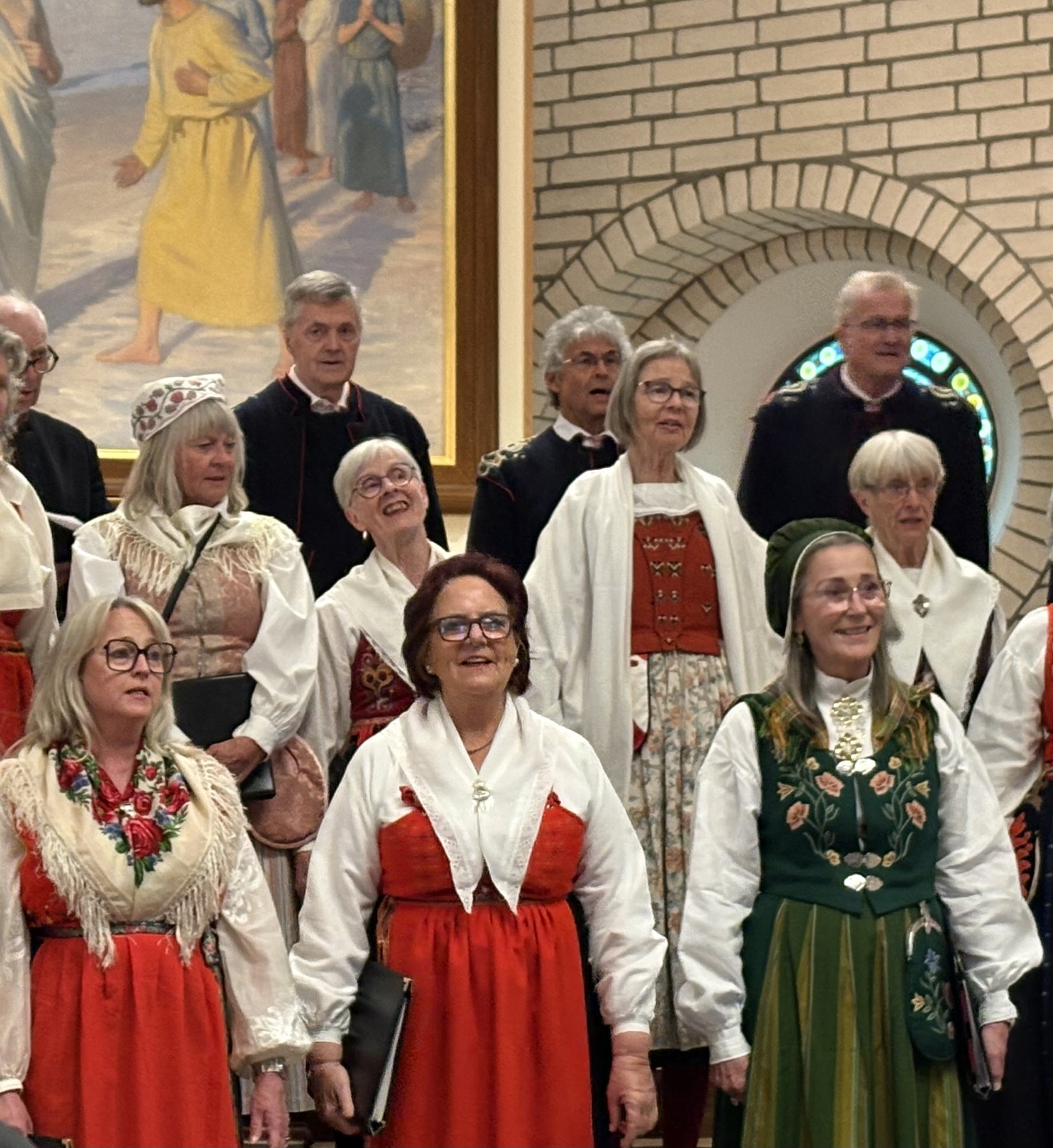
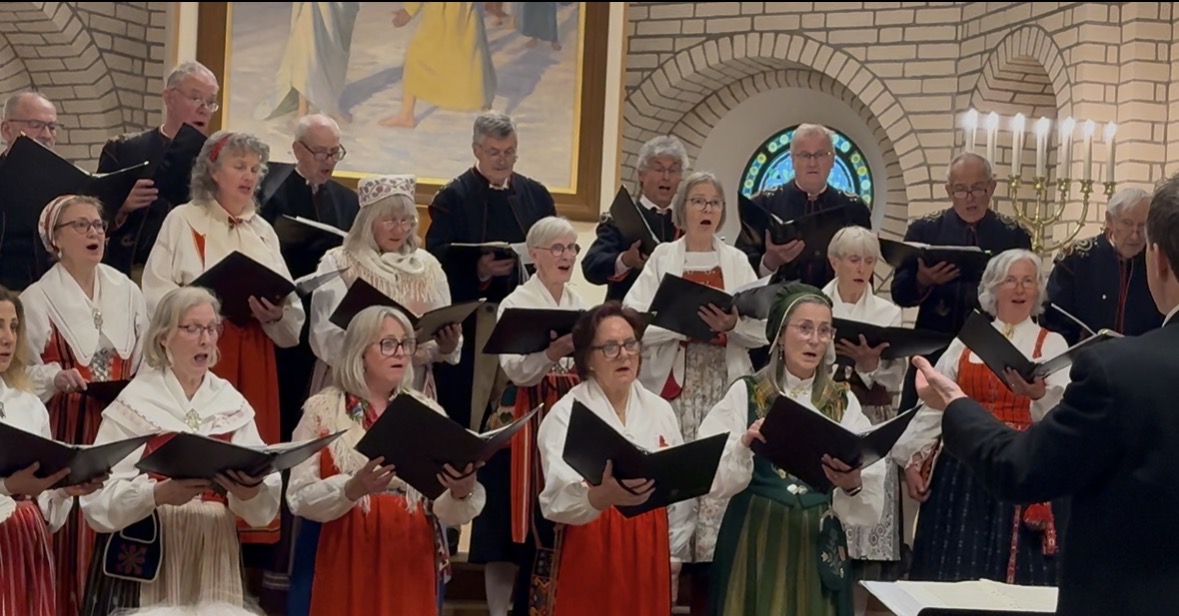
The renowned Leksands kyrkokör from Sweden was visiting Frederikshavn and took the audience on a musical journey through the sound world of Scandinavian church and folk music. The church itself, which was built in the late 19th century for a then rapidly growing city, is simply called Frederikshavn Kirke, or also the big church to distinguish it from the older Fladstand Kirke. I'd like to share a few interesting details: The church was designed by architect Vilhelm Ahlmann in the Romanesque style. A striking feature is the central tower, which is 56.5 meters high and is flanked by four smaller side spires.
The building is designed as a cruciform church with equally long arms and is made of light limestone and, with 1,100 seats, is considered one of Denmark's largest churches. The painting "Christ and the Disciples on the Sea of Galilee" is by the famous Skagen painter Michael Ancher. Interestingly, the depiction of the beach is more reminiscent of Skagen's coast than the biblical lake. And the baptismal font shows a kneeling angel carrying a shell, and was carved from a single block of marble.
It was a gift from a Frederikshavn-born consul general from St. Petersburg.
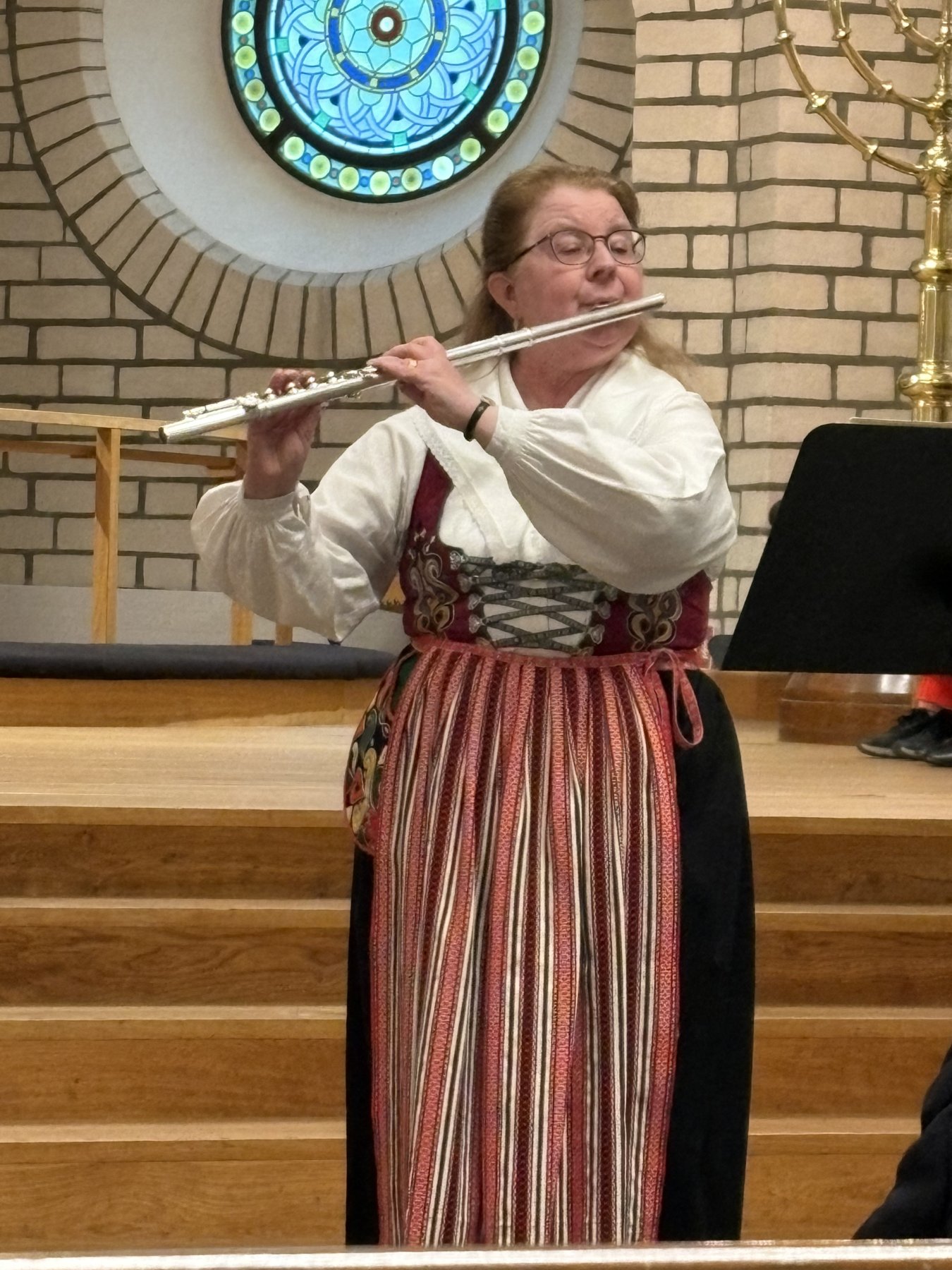
Already upon entering the church, it became clear that this evening would be something special. The singers, dressed in their traditional Leksandsdräkt costume, brought not only music but also a piece of Swedish cultural history to North Jutland.
The choir comes from the municipality of Leksand in the Dalarna region, which is considered one of Sweden's most important cultural landscapes. Many associate Dalarna with red wooden houses, Midsummer festivals, folk music, and deeply rooted traditions. It is especially there that customs, dances, and folk costumes have remained particularly vibrant over the centuries.
The colorful costumes of the choir are therefore far more than mere concert attire. The Leksandsdräkt is one of Sweden's oldest and most renowned folk costumes. What's particularly fascinating is that colors and patterns are traditionally closely connected to the church calendar. Depending on the season or occasion, different variations were worn. This makes the clothing itself an expression of history, community, and faith.
This created an impressive visual connection between music, tradition, and Nordic identity that shaped the entire evening.
Under the direction of Mikael Boström Eric', who shares the musical work at the church with Fredrik Winberg, the choir presented the program "Allt under himmelens fäste" - roughly "Everything Under Heaven's Vault" in English.
And that's exactly how the concert felt: vast, open, Nordic, and yet very personal.
The repertoire spanned an impressive range from sacred choral music, Swedish Romanticism, folk songs, and modern arrangements. Demanding European church music stood alongside works by Hugo Alfvén, who was closely connected to Leksand and is considered one of Sweden's most important composers.
Works by Benny Andersson, co-founder of the Swedish cultural icon ABBA, also resonated. Particularly impressive was the performance of "Anthem" from the musical Chess. Such pieces lent the concert an exciting stylistic openness and impressively demonstrated how naturally the choir could move between classical choral music, folk tradition, and modern Scandinavian pop culture.
Particularly beautiful was the ease with which the choir moved between musical worlds. At times the music sounded solemn and sustained, then light and almost dance-like again. Modern Swedish folk songs and surprising pop elements also found their place in the program without losing the special character of the evening.
This special evening, however, was not solely characterized by musical quality, although that was impressive. It was above all the warmth and naturalness with which the choir sang.
The ensemble sounded remarkably harmonious and balanced. The voices merged into a soft, Nordic overall sound that quickly captivated the listeners. At the same time, there was room for fine dynamics, emotional nuances, and quiet moments.
You could feel that here were people making music together who are deeply connected to their tradition and want to pass it on with genuine joy.
Especially in times when so much has become fast-paced, such cultural encounters feel particularly valuable. The evening impressively showed how music can connect people and countries, especially in Scandinavia where this has a long tradition.
There was also a delightfully charming scene during the concert: conductor Mikael Boström Eric' introduced the evening himself and spoke quite naturally with the Danish audience. After all, Swedes and Danes usually get along remarkably well, as the languages are closely related and in the Scandinavian region people often switch between them quite naturally. So Mikael guided us through the evening, sometimes in Swedish, sometimes in Danish.
All the more funny was the moment when he suddenly began speaking in English. Midway through a sentence, he paused, looked laughingly at the audience, and said something like: "I actually don't know why I suddenly started speaking English." The church immediately responded with warm laughter.
The brief switch to English was actually unnecessary, but it showed very humanly that we sometimes forget how close the languages actually are and how confusing it can get here at the three-country corner with all the tourists. I've also caught myself speaking a jumble of languages (in Danish: volapyk) more than once.
So if you missed this wonderful concert in Frederikshavn, you're in luck: Leksands kyrkokör will also present their program at the Swedish Seamen's Church in Skagen.
By the way, it wasn't until the very end that I understood why the friendly gentleman at the exit had slipped me his phone number: he had seen that I had taken some photos and short videos during the concert and really wanted to get them.
Somehow that fitted perfectly with this evening. Open, warm, and human. Almost as if we had known each other for a long time despite different countries and languages. And we also got a nice contact for the next trip to Sweden.