Dream House in Denmark: Bargains, Stock Market Tricks, and the Hard Reality
If you're toying with the idea of moving to Denmark, you'll quickly end up on real estate portals like boligsiden.dk. The prices—especially here in North Jutland or in structurally stronger but rural areas—often feel like an early Christmas present to Germans. A whole house for the price of a one-bedroom apartment in Munich? Yes, it exists. But before you pack your bags, we need to talk about two things: Danish construction and brutal financing.
The "Bargain Trap": Romance vs. Renovation Backlog
In Denmark, you often find houses that seem incredibly cheap by German standards. But be careful: "cheap" often means nothing much has happened besides a fresh coat of paint on the walls since the 70s. If you're used to German standards—solid walls, perfect insulation, and windows that don't let drafts through—these bargains can be a real shock. A massive renovation backlog is usually the rule, not the exception.
Of course, there are also wonderful houses with all the bells and whistles, heat pumps, and Danish design luxury. But then they come with a price tag and can get really expensive.
The Danish Mindset: Houses Are Like Cars
The biggest cultural difference is the relationship to property ownership. We Germans build for eternity, for our heirs, for life. The Dane is more pragmatic. A house is a tool. When you find a better job elsewhere, you sell the house and buy another one in the new place. Danes follow the work. Because buying is often cheaper than renting here, it's completely normal. There's no property transfer tax, which makes the move easier. Instead, you pay annual taxes on the property value directly to the tax authority (Skattestyrelsen).
The Cold Shower: As a German, You Won't (Initially) Get Financing
Now comes the point where many dreams burst: financing.
I often hear: "I'll finance it through my German bank." Forget it! German banks won't give you money for a property abroad because they have no recourse to it in case of problems.
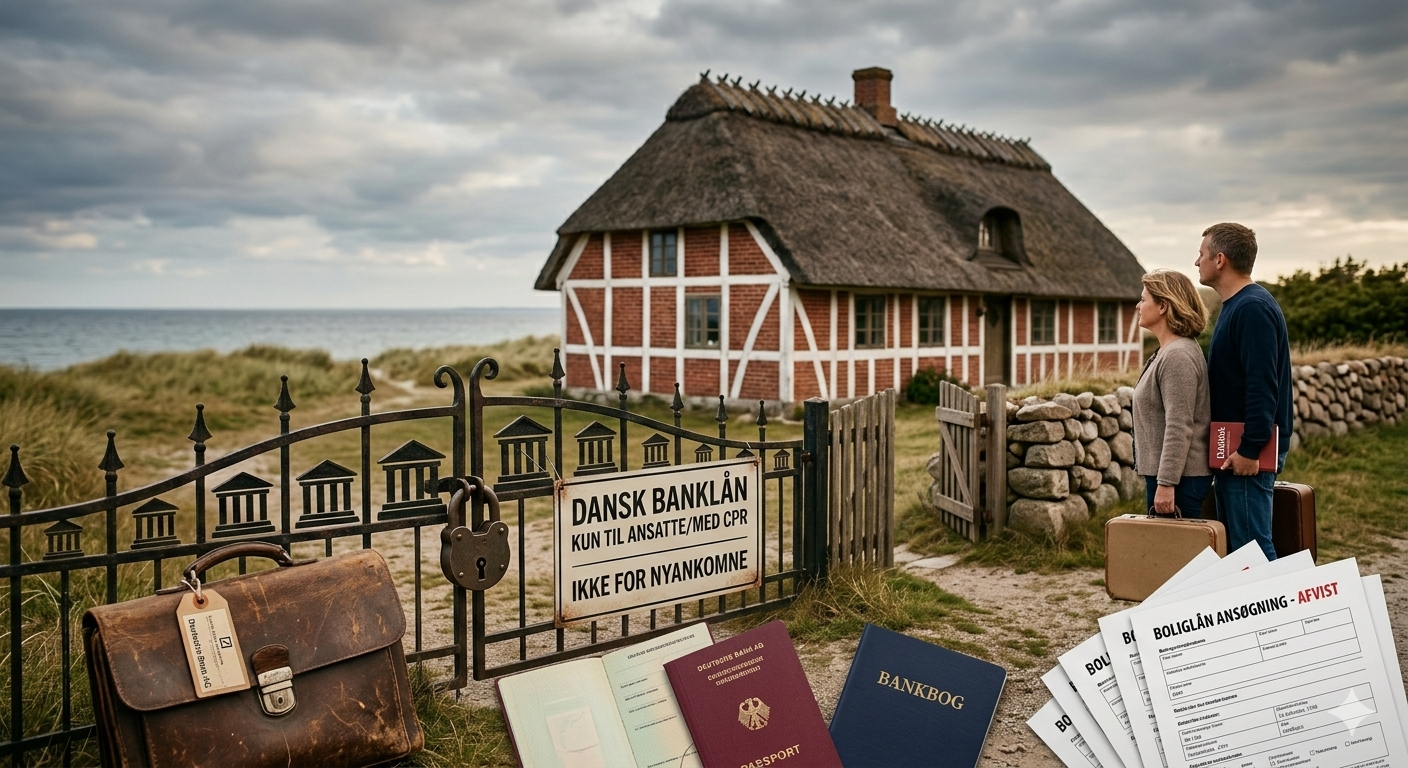
And Danish banks? They don't exactly greet newcomers with open arms. As a newcomer without Danish history, without proven employment over several months (or years), and without Danish creditworthiness, it's almost impossible to get a loan.
The hard truth is: if you don't have enough savings in your account to pay for the house in cash or at least make a very large down payment, you have almost no chance at first. You have to painstakingly earn the trust of Danish banks.
The "Miracle" for Later: The Realkreditlån System
Once you're in the system, you can look forward to the Danish realkreditlån. This is unique in the world. You don't borrow the money directly from the bank; instead, it's financed through bonds on the stock exchange. The best part: when interest rates on the market rise, the value of your loan decreases. You can sometimes "buy back" your debt at a massive discount. It's a mathematical trick that helps Danes reduce their remaining debt when interest rates change.
My Advice to You
Dream the dream of a house in Denmark, but be realistic!
1. Check your savings: Without a decent buffer, nothing works at first. 2. Rent first: Arrive in the country, learn the language (see my last post!), find a job, and build yourself a Danish identity. 3. Have patience: Only when the bank sees you're settled does the door to the Danish credit market open.
Denmark is a paradise for homeowners—but you have to earn your way into that paradise.