A glorious day in Skagen: the sky as blue as only the painters of the Skagen School could have mixed it, the sun glittering on the East and North Sea, and I'm on the bus with 41 cheerful guests.
As a tour guide, you know every stone, every dune, and every story here—and of course, all the questions guests might ask.
But then came that one moment that caught me completely unprepared.
We were in the middle of a wonderful tour through town, chatting briefly in Danish with Ingelis, who was accompanying me today, thinking ahead in German about the next leg, and moderating the group in English. If you do this job, you know it: this linguistic chaos in your head is like a cocktail that sometimes causes a brief short circuit.
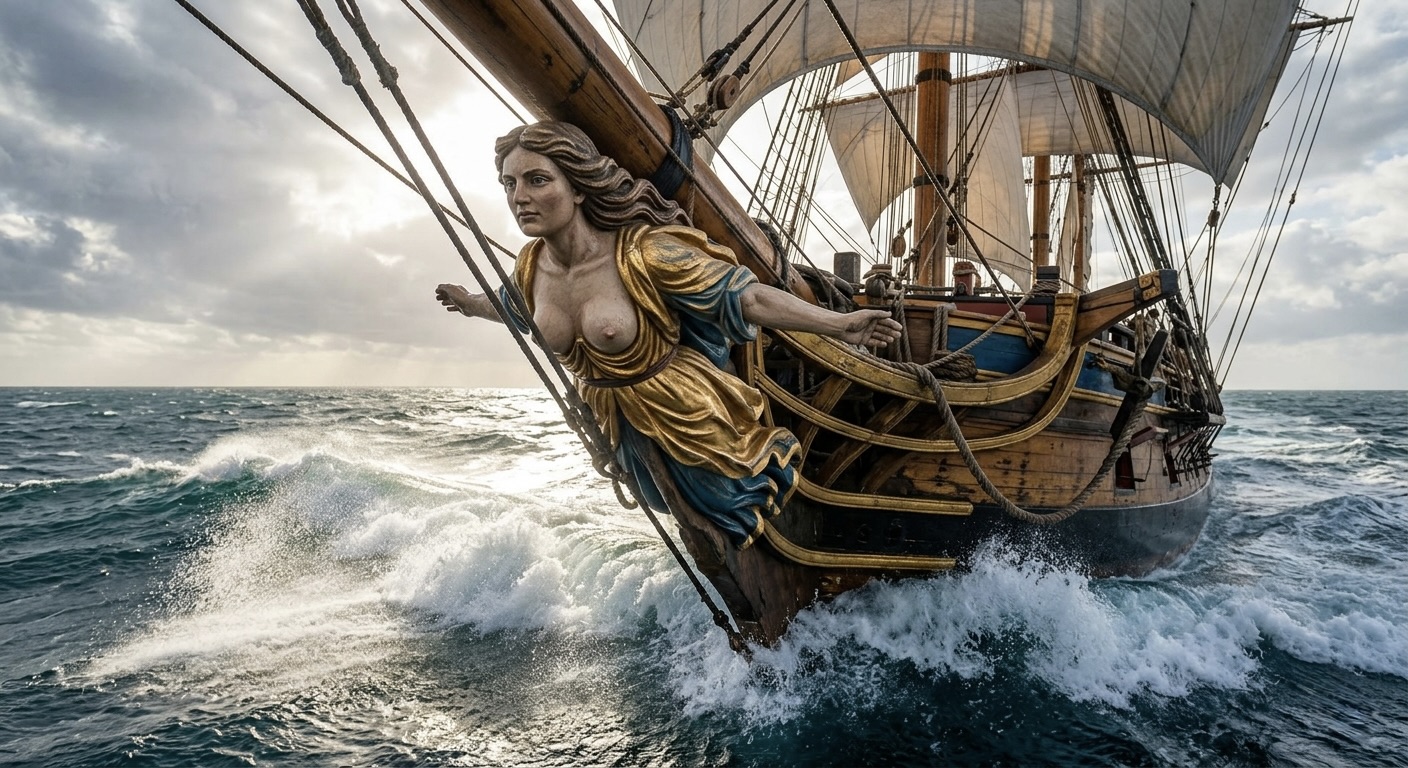
Suddenly, an Australian guest approached me with a mischievous smile and asked me a question that completely threw me off: "Why is it that figureheads always show their breasts?"
I was honestly shocked at first. Not because of the question itself, but because in my trilingual muddle, I needed a moment to realize what he actually meant. Figureheads? Breasts? Why is he asking me this of all times?
But when the penny dropped, I had to admit defeat. Me, who usually has an answer for everything, just stood there with no idea.
So while my guests enjoyed their well-deserved coffee break, I took the time for a little research session.
What I discovered is so fascinating that I don't want to keep it from my Australian guest alone, but from you either. Because it's much more than just "sailors' tales."
The first and probably most fascinating reason lies in deep maritime superstition. You have to imagine: the sailors of earlier centuries were at the mercy of the forces of nature. The sea was often personified as a capricious, powerful woman. There was a firm belief that a naked woman could tame the sea's wrath. An old legend said that the sea would be "ashamed" at the sight of an exposed breast and would then calm down.
So the bare-breasted figurehead at the bow wasn't a decorative accessory for the crew, but a spiritual shield. It was meant to shame the storm and smooth the waves to guide the ship safely through the spray.
Another aspect is the symbolism of nudity in that era. While women on board were often considered bad luck, the figurehead was the "soul" of the ship.
- Nudity as truth: In art history, an uncovered body often stood for naked truth and purity.
- A figure that has nothing to hide leads the ship honestly and without deception to its destination.
- Wayfinder: People believed that a figurehead with open eyes and a bare chest could "see better."
- It was meant to spot shallows and dangers earlier than the human crew.
Of course, the zeitgeist also played a role. In the 18th and 19th centuries, the golden age of great sailing ships, neoclassicism was fashionable. People loved the aesthetics of ancient Greece and Rome. The sculptors who carved these magnificent wooden figures drew inspiration from ancient goddesses or nymphs. In classical art, partial nudity was a sign of sublimity and divine beauty. So it was simply the "high-end style" of that era to adorn your ship with such an idealized figure.
But was it always like this? That's the point where I could surprise my Australian guest later at the bus: No, it wasn't standard.
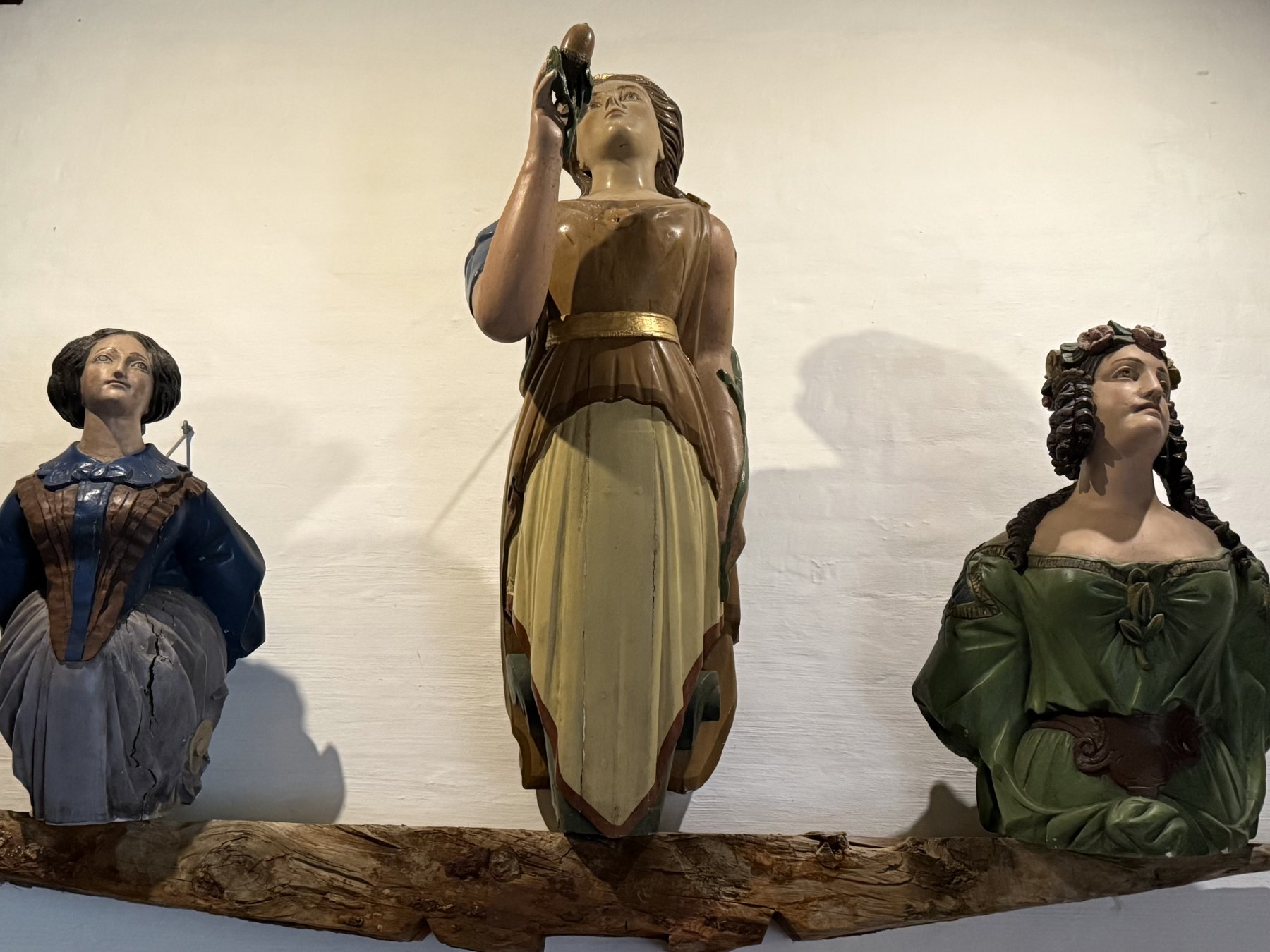
Although the bare-breasted ladies dominate the image in our minds, there was enormous variety. Many merchant ships carried very modest figures, often modeled after the wives or daughters of ship owners, naturally high-necked and in their finest Sunday dress.
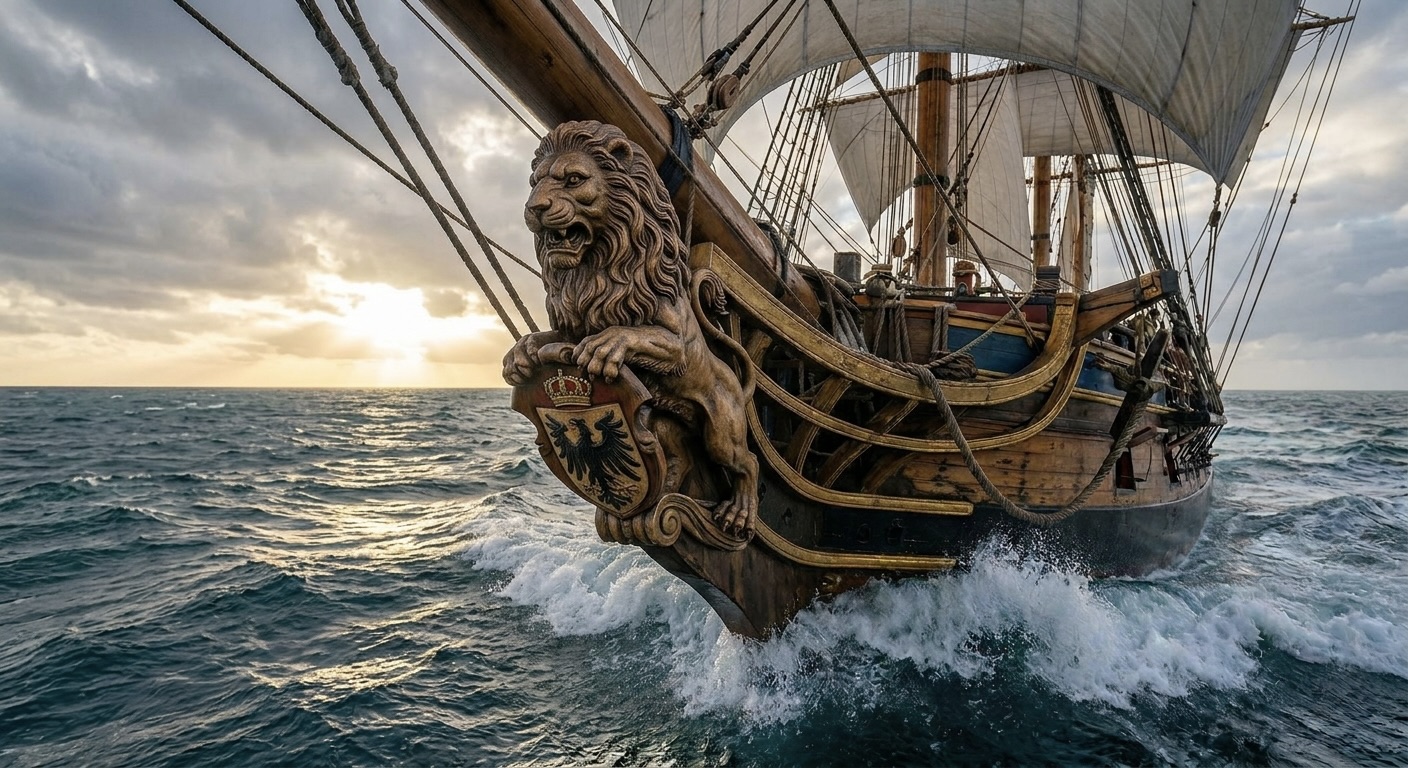
And on warships, lions, dragons, or proud admirals often dominated, to demonstrate strength and power.
This little excursion shows once again: you never stop learning, even when you think you know your territory inside and out. Thanks to my Australian guest and his curious question, I now see the figureheads in our coastal museums with completely different eyes.
It's this mixture of fear of nature, belief in magic, and striving for beauty that makes these wooden ladies so special.
A true piece of human history that plowed through the waves at the bow and knowledge that shouldn't just be in the luggage of Danish insiders!
So the next time you see an old ship, you'll know: this isn't mere exhibitionism, but an attempt to appease the ocean with the weapons of beauty.