Sick in Denmark: Yellow card, digital marvels, and the 170-kilometer drive
When you move to Denmark, you're not just entering a new country—you're stepping into a completely different healthcare system. One that keeps surprising me. Sometimes pleasantly, sometimes disillusioning. But never boring.
The yellow card—your key to the system
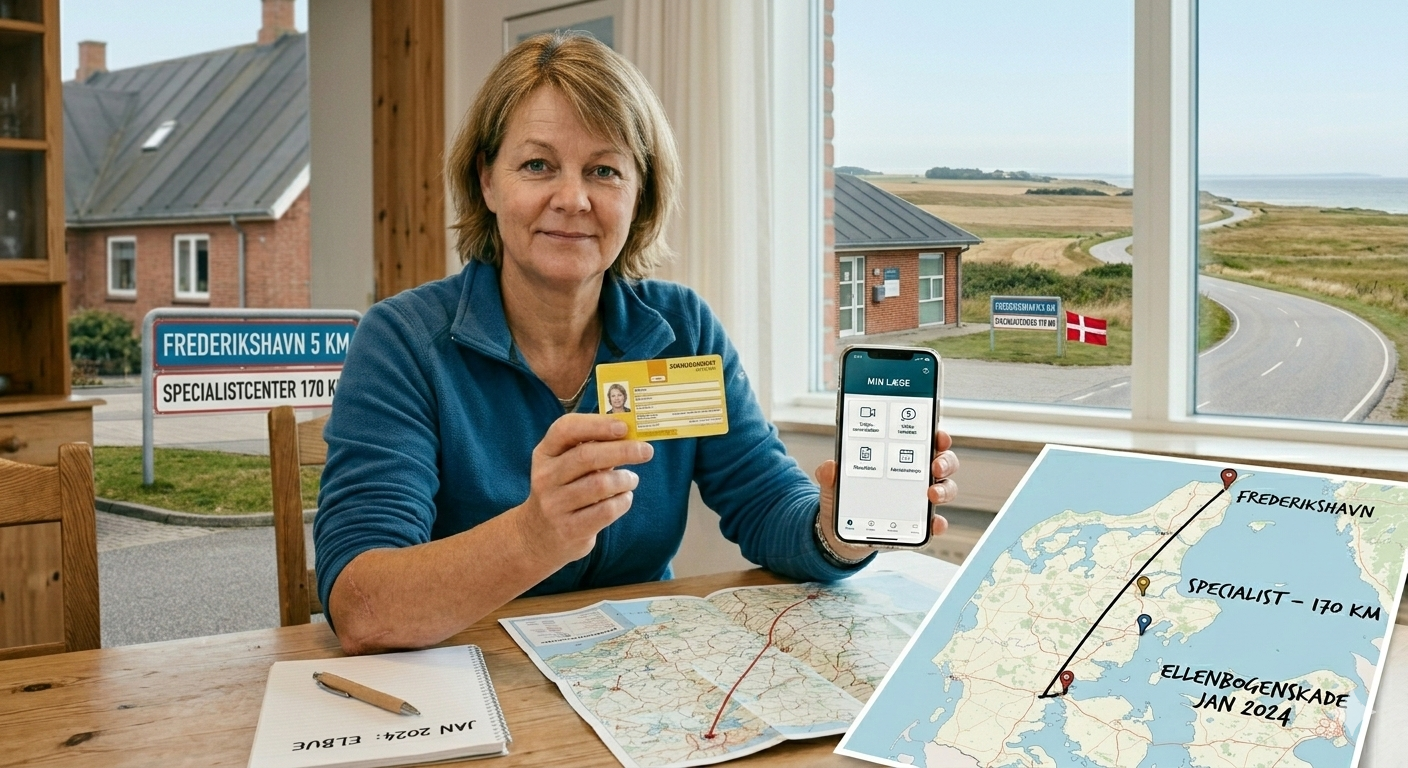
Shortly after registering at the citizen's office, it lands in your mailbox: the Sundhedskort. An unassuming yellow card that is, however, your entry ticket to one of the most digitalized healthcare systems in the world. On it you'll find the name and address of your assigned general practitioner—and that's where everything begins in Denmark.
If you're coming from Germany and are used to just dropping by a cardiologist, orthopedist, or dermatologist whenever you please, you'll be gently but firmly re-educated here.
The "Egen Læge"—gatekeeper and ally
In Denmark, there is no free choice of specialists. Period. Your entire medical life revolves around your Egen Læge—your own general practitioner. He is your first point of contact, and often the only one. And there's a reason for that.
If you need a specialist, your doctor gives you a Henvisning—a referral. Without it? Either you can't see one, or you pay out of pocket, and that can get expensive.
What confused me at first, I now love: Between 8:00 and 9:00 in the morning, the doctor is often personally available by phone. Many things get cleared up in that conversation—no waiting room, no drive. Sometimes you even get an appointment for the same day. That's real patient care.
Costs: Almost free—but with exceptions
The Danish system is tax-financed. Doctor visits, hospital stays, operations—all free. No practice fee, no copay, no form jungle.
The catch? You pay for medication yourself (though there's a discount system), and the dentist gets really expensive for adults. Dental care is truly a private matter in Denmark. If you don't have supplemental insurance here, you'll feel it painfully at your first appointment—literally and figuratively.
Digitalization: Light-years ahead
While Germany is still debating electronic patient records, Denmark has made it everyday reality. Through the Min Læge app or the sundhed.dk portal, I can see my entire medical history, get test results often within hours, and renew prescriptions with a single click.
No waiting room, no paperwork, no having to ask twice. Once you've experienced this, you don't want to go back.
The reality in the countryside: 170 kilometers to a specialist
But—and this is a big but—Denmark is increasingly centralizing its specialists in major cities. In Copenhagen or Aarhus, you hardly notice it. Up here in the north, it's different.
I remember my early days well: After my accident in January 2024, I had to see a specialist about my elbow. He was 170 kilometers away. That's a distance worth sitting with for a moment.
We took it with Danish calm—combined the appointment with a little trip. But one thing's clear: High-quality medical care exists in Denmark, just not always around the corner. If you live here without a car, a specialist appointment can quickly turn into an all-day journey.
Emergency? Please call first!
An absolutely important point for all newcomers:
Never just drive to the emergency room (Skadestue). The door will literally be closed if you haven't called first.
- Lægevagten—the medical on-call service—is your first point of contact in the evenings and on weekends. Only after you call and get a referral can you come in.
- The same applies to Tandlægevagten, the emergency dental service. In the countryside, the nearest emergency service can easily be 80 kilometers away. And a weekend treatment costs real money, usually payable on the spot.
The Danish healthcare system is safe, fair, and digitally brilliant. But it demands three things: personal responsibility, mobility, and patience.
You're not a number in the system—you're part of a networked, well-thought-out whole. If you truly accept the principle of the general practitioner as your first point of contact and stay mobile, you'll quickly come to love the uncomplicated nature without paperwork.
And if you sometimes have to drive 170 kilometers to see a specialist...
Vi ses—and stay healthy!