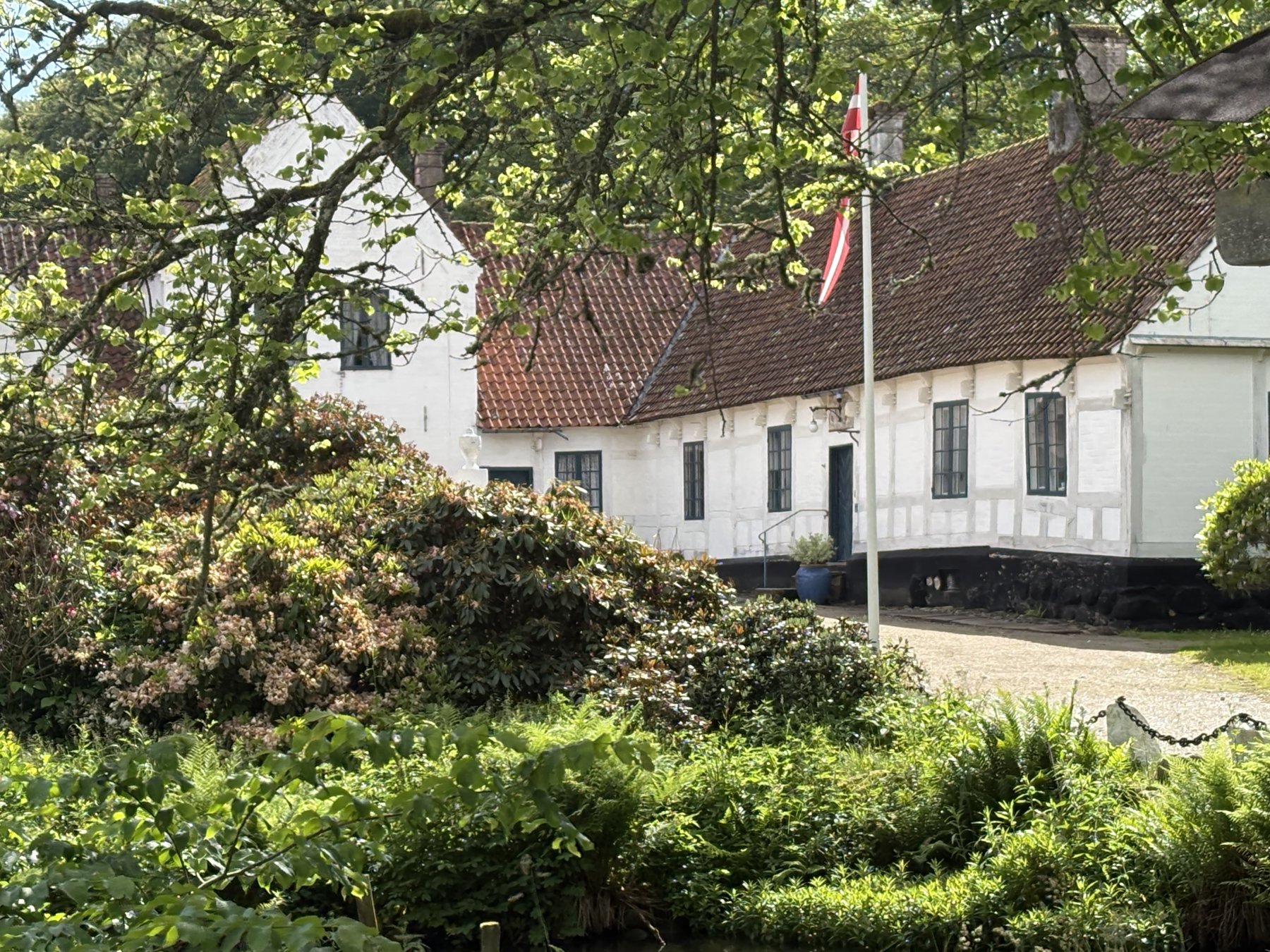
When you visit Frederikshavn, you'll eventually stumble upon Bangsbo. Many know the park, the wildlife park, or the botanical garden. Some visit the museum. But few realize how many stories are hidden behind the walls of this old manor house.
Since I work there myself, I have the opportunity to discover the house again and again. And the more I walk through its rooms, the more I realize that Bangsbo is far more than just a museum.
The history of the estate dates back to 1364. Over the centuries, Bangsbo changed hands many times. But perhaps its most exciting period came around 1900 under Johan Knudsen. Back then, Bangsbo became a cultural meeting place for some of the most renowned artists, writers, and personalities of the time.
When you walk through the rooms today, you're treading on the same floors where once lively conversations took place, new ideas were born, and friendships were nurtured. Among the guests were writer Herman Bang and artist Thorvald Bindesbøll. Bangsbo was far more than a manor farm back then. It was a cultural hub of North Jutland.
What I find particularly impressive is that many rooms have preserved the atmosphere of that era to this day. The White Room, the dining room, the servants' chamber, or the Empire Room tell not only of the wealthy owners, but also of the everyday lives of the people who lived and worked here.
Also fascinating are the various themed exhibitions. One of them is dedicated to the women of Bangsbo. It's about women who were often far ahead of their time and didn't settle for the social expectations of their era.
I found Eva Drachmann particularly interesting. Many visitors recognize her surname, because she was the daughter of the famous poet and painter Holger Drachmann from Skagen. While her father was one of Denmark's most well-known artists, Eva also led a creative life as a painter, illustrator, and author. She represents many women of her time who went their own way, even though society imposed narrow boundaries on them.
Another exhibition really surprised me: the hair art collection.
What seems rather unusual to many visitors today was widely practiced in the 19th century. Hair was considered something very personal and enduring. While photographs were still rare, people often kept a lock of hair from a loved one. This led to the creation of ornate jewelry, pictures, and mementos.
Many of these pieces were created after the death of a family member. They served as a visible reminder of a person who had been lost. Others were created as signs of love, friendship, or connection.
When you look at these delicate works today, it's easy to forget that they're actually made from real human hair. Only upon closer inspection do you realize how much patience, skill, and feeling went into these works of art. They tell stories of people long gone, and make the past tangible in a very special way.
But that's exactly what makes Bangsbo special for me.
It's not just about dates, names, or historical events. Behind every room, behind every piece of furniture, and behind many exhibits are people with their hopes, successes, joys, and losses.
You don't just feel history here in display cases or on information boards. You encounter it in the rooms, in the pictures, in the stories, and sometimes even in the small details you only notice on a second glance.
Maybe that's why I love this place so much. Bangsbo is not a museum that merely tells you about the past. It's a place where the past remains alive.
If you're ever in Frederikshavn, take time for a visit. Don't just walk through the rooms. Look more carefully. Behind every door there's a story.
And that's exactly what makes Bangsbo so special.